
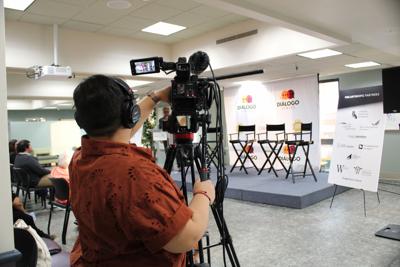



CALÒ News Reporter, Gladys Vargas, filming Thursday's Dialogo. Photo by Michelle Zacarias
Californians need trusted, sustainable and impactful local news, especially when it comes to communities of color who depend on ethnic and community news outlets to deliver trusted coverage of their neighborhoods.
Locally-run outlets like Boyle Heights Beat, which provides insight into the gentrification and affordability impacting East Los Angeles residents; Los Angeles Public Press, whose explainers and resource guides maintain L.A. neighbors informed; and Q Voice News, which sheds light on the issues impacting LGBTQ+ communities across southern California, are vital to residents in order to keep them informed and engaged.
As hyperlocal, independent media outlets continue to be on the decline, the California legislature must approve a new bill that would prioritize locally-run media for state-run ad campaigns. Such a move would ensure that critical public information reaches the state's most marginalized residents while guaranteeing that state funds are channeled directly into the newsrooms that need them most to remain sustainable and impactful. A Pew Survey from late last year found that only 37% of U.S. trusted social media sites, 56% trusted national news organizations while 70% trusted local news outlets.
SB 1358, dubbed the Ethnic and Community Media Equity Act, would require California to direct 40% of its advertising funds to ethnic and community media, create a state database of these outlets and simplify the direct bidding process with state agencies. The bill takes on a more pragmatic approach to SB 1511, signed in 2024 by Gov. Gavin Newsom, directing state agencies to make a plan to increase ad funds for ethnic and community media.
Introduced by State Sen. Susan Rubio (D-Los Angeles), the bill was last heard at the Senate Appropriations Committee, where members voted to temporarily pause the legislation while they study its fiscal impact.
According to American Community Media, there are an estimated 300 to 350 ethnic news outlets in the state serving primarily Latino, Black, Asian American and Native American populations.
Cities like New York and Chicago have adopted similar models guaranteeing at least 50% of annual municipal ad dollars go to ethnic and local news outlets. In New York City alone, the measure directed $72 million to community media between 2020 and 2024, according to a study conducted by the Craig Newmark Graduate School of Journalism.
“This bill will provide much needed resources so [local news outlets] can not only survive but they can thrive in their communities,” Rubio said during a committee session, adding that local outlets are needed to ensure California’s diverse population obtains news from trusted community journalists.
“In California we really pride ourselves in being inclusive… and I think that it’s time that we are more intentional about providing resources. This bill simply aligns with our goals of reaching out to those that are hard to reach and making sure that we keep these media outlets alive because they're important and that we uphold our goals of access.”
At the Latino Media Collaborative — CALÓ News’ parent organization — we believe that in order to have a sustainable and thriving community-centered media landscape, our local institutions must support the work that our newsrooms produce daily. The approval of this legislative proposal would ensure the survival and magnification of hyperlocal newsrooms, strengthening their operations and reach within their coverage areas.
Historically, underserved and hard-to-reach populations have been left behind when it comes to accessing essential information and critical government programs. This legislation not only provides an alternative revenue source to help sustain a network of trusted messengers, but it also directly connects essential state communication with those who would benefit the most. Access to information is a basic human right and California would be doing its residents a disservice should its legislators fail to pass SB 1358.







(0) comments
Welcome to the discussion.
Log In
Keep it Clean. Please avoid obscene, vulgar, lewd, racist or sexually-oriented language.
PLEASE TURN OFF YOUR CAPS LOCK.
Don't Threaten. Threats of harming another person will not be tolerated.
Be Truthful. Don't knowingly lie about anyone or anything.
Be Nice. No racism, sexism or any sort of -ism that is degrading to another person.
Be Proactive. Use the 'Report' link on each comment to let us know of abusive posts.
Share with Us. We'd love to hear eyewitness accounts, the history behind an article.