

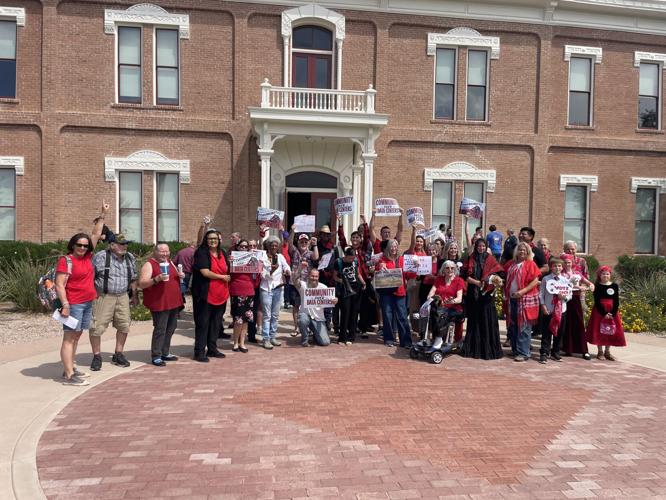


Community members gather outside of the Pinal County Board of Supervisors hearing room to celebrate the 4-1 votes against two zoning requests related to the proposed La Osa Data Center project, on Wednesday, Aug. 26, 2026. (River Graziano/CALÓ News)
FLORENCE, Ariz. – On Wednesday, the Pinal County Board of Supervisors voted 4-1 against rezoning land for yet another proposed data center project near Eloy, Arizona, marking a major win for environmental activists.
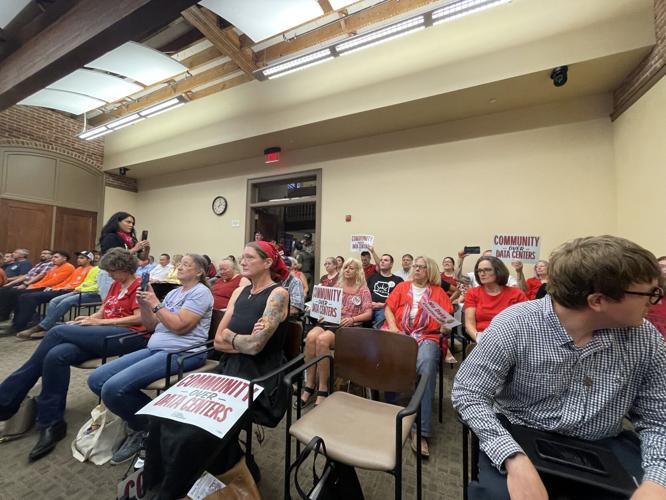
Members of local organizations like Rural Arizona Engagement (RAZE) and Pinal Code Watchers and local labor unions packed the hearing room where Pinal County supervisors deliberated over the rezoning request for the La Osa Energy Center project. Organizers arrived early at the Florence location, ready to deliver hours of public testimony on the proposed project's potential impacts.
Vermaland, a land developer based in Phoenix, proposed the over 3,300-acre facility complete with 59 buildings intended for data centers, gas generation plants and a fire station. After initial review and requested amendments, the county approved the proposal for La Osa in Nov. 2025. By then, advocacy organizations like RAZA had learned of the proposal and began raising awareness in local communities.


A rural-to-industrial rezoning ordinance proposed in April sought to zone nearly 2,400 acres of Pinal County land for La Osa, a key step in the project’s timeline. The Board of Supervisors last heard public comment about the ordinance on May 27, but decided to delay the final vote until Aug. 26, when they would again hear from dozens of community members and advocates.
Speakers who opposed the data center project, encouraged to wear red by organizers, expressed concerns about wildlife preservation, water usage and noise pollution. Others said they feared a potential drop in their property values if the project moved forward.
Malorie Martinez, an organizer with RAZE and a Pinal County resident, described frequent power outages in the county and the stress they put on her family.
“When Pinal County is at peak energy use, who will take priority when the power outages are imminent?” Martinez said. “Will it be the grandmother who needs an oxygen tank? A person whose medication requires refrigeration, such as insulin? The single mother concerned about food security? Or will it be the data center owned by tech billionaires?”

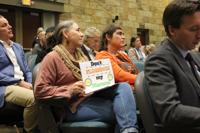
Members of Rural Arizona Engagement and Pinal Code Watchers wear red shirts and hold up signs as public speakers address the Pinal County Board of Supervisors in opposition to the proposed La Osa Data Center project on Wednesday, Aug. 26, 2026. (River Graziano/CALÓ News)
Speakers in favor of the energy center said they looked forward to the jobs that would be created for union trade workers and engineers.
Bill Ruiz, a member of the Workforce Arizona Council, addressed the Board of Supervisors on behalf of Western States Carpenters Union Local 1912, saying new data centers are critical on both local and national levels.
“We believe it’s not a blue hat or a red hat that you wear; it’s the hard hats that [are] going to pay the bills here,” Ruiz said. “I’d ask [the Board of Supervisors] to respect how we look at the technology… how many people realize today that data centers are key in helping our deployed forces?”
Other unions were also represented during the public comment section, including Sheet Metal Workers Local 359, the International Brotherhood of Electrical Workers Local 570, and the International Union of Operating Engineers. While these speakers expressed unanimous support for La Osa, local organizers say that union workers have expressed mixed opinions.
“They're not a monolith,” Antonio Ramirez, political director of RAZE, said in an interview with CALÓ News. “There's members of the unions that I spoke to who were very conflicted about having to be here. And some even told me that they don't even support the project at all.”

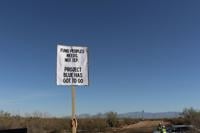
Large construction vehicles have started razing the desert to make way for the data center, despite wide opposition from Southern Arizona residents.
According to Natali Fierros, RAZE’s executive director, several union workers she spoke with were personally against the expansion of data centers; however, the promise of work associated with La Osa enticed them to stand with their unions during the meeting.
“I think that collectively, we can find job opportunities,” Fierros said. “Our ask is that community input is listened to and that jobs are created in ways that are sustainable and meaningful in our own backyards. We don't want Band-Aid solutions. We want folks to dig in on the hard topics.”
After public comments were closed, the board voted 4-1 to deny the rezoning. Supervisor Stephen Q. Miller, who voted in favor of the data center, requested to explain his vote.
“I really, truly believe that all the negativity on these data centers has been from our adversaries around the world,” Miller said in his explanation. “We need [data centers] for national defense,” mirroring the argument the present administration has made to accelerate the development of these centers. In July 2025, President Donald Trump signed an executive order directing agencies to “utilize federally owned land and resources for the expeditious and orderly development of data centers” that are “essential to national security, economic prosperity and scientific leadership.”
“It's just a lazy response,” Ramirez told CALÓ News in response Miller’s comment. “It discounts the presence of most of the people here, and to be frank, most of the people are from 10 minutes away, people that Malorie [Martinez] had helped recruit from her community. We did a training [in Eloy], people from the community showed up and were very concerned about the project.”


Arizona Gov. Katie Hobbs recently vetoed a bill pushed by a data center developer lobbyist that would have significantly reduced the power of citizen initiatives statewide
Community organizers celebrated the rezoning denial outside of the board chambers. Chants of “Community needs over billionaire greed!” rang out, and individuals in red shirts repeatedly expressed satisfaction, relief and a renewed sense of hope.
“When there is the opportunity for community input, when the community is aware, that community has a voice,” Fierros said. “I think that's what was reflected here. That was exciting.”
La Osa Energy Center’s proposed rezoning is a rarity in Arizona, where many other projects are being fast-tracked despite community and sometimes even local government disapproval. While cities like Tucson have recently approved stricter restrictions on data center development, others in metro Phoenix have approved rezoning requests.
According to community organizers from RAZE, clear and enforceable policies are key to preventing the negative impacts associated with data center development.
“What we really need to do is have more comprehensive policy and code reform that addresses data centers,” Ramirez said. “We [need to] ensure transparency and guardrails are in place before we even really consider future projects…That process should also be informed by community.”
Changes in leadership after the upcoming midterm elections may also affect local data center decisions.
“I think the bigger picture is elections have consequences and we are on the cusp of a big election,” Fierros said. “It's not only that we need to get people involved; it's that we need to make sure that folks are educated, starting from the bottom of the ballot and working their way up.”
River Graziano is a freelance journalist for CALÓ News. They grew up in the Ahwatukee area of Phoenix and later attended ASU in Tempe, where they spent two years as an editor at The State Press. Their reporting with CALÓ News covers advocacy efforts impacting Latine communities across the Valley.








(0) comments
Welcome to the discussion.
Log In
Keep it Clean. Please avoid obscene, vulgar, lewd, racist or sexually-oriented language.
PLEASE TURN OFF YOUR CAPS LOCK.
Don't Threaten. Threats of harming another person will not be tolerated.
Be Truthful. Don't knowingly lie about anyone or anything.
Be Nice. No racism, sexism or any sort of -ism that is degrading to another person.
Be Proactive. Use the 'Report' link on each comment to let us know of abusive posts.
Share with Us. We'd love to hear eyewitness accounts, the history behind an article.