
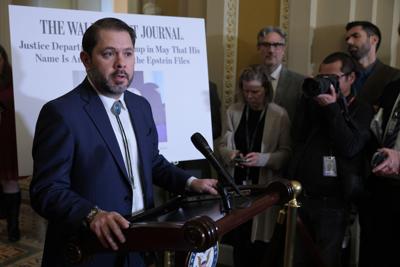


Sen. Ruben Gallego (D-AZ) talks to reporters following the weekly Senate Democratic policy luncheon at the U.S. Capitol on November 19, 2025 in Washington, DC. (Chip Somodevilla/Getty Images)
Following public outcry of the Trump administration’s move to set up an immigration processing facility in metro Phoenix, several Arizona officials are challenging the Department of Homeland Security’s move.
In a Tuesday letter addressed to DHS Secretary Kristi Noem and Immigration and Customs Enforcement (ICE) Acting Director Todd Lyons, senators Mark Kelly and Ruben Gallego (D-AZ) expressed their “serious concerns” regarding the acquisition of the warehouse in Surprise.
It was sent a week after several Democratic U.S. representatives from Arizona also wrote to the secretary demanding answers.
Located on Sweetwater Avenue and Dysart Road, the facility was quietly purchased by the DHS for over $70 million on Jan. 23, sold by New York-based real estate LLC Rockefeller Group. The 418,400 square-foot warehouse would hold approximately 1,500 detained migrants as part of the Trump administration’s immigration crackdown.
The purchase, according to the U.S. senators, was carried out without notifying city or county officials, and without taking into consideration the impact to local residents.
“Given the scale of this project, the total lack of community involvement, the concerns we have heard from local leaders, and the potential implications for the community and region, we urge the Department to immediately provide answers about this project before it moves forward,” the letter reads.
The senators go on to address the rapid warehouse purchase, mirroring that of other purchases across the country where ICE intends to hold thousands of individuals as they go through the deportation process. The acquisitions raise “serious concerns about whether these projects have had sufficient planning and environmental review to proceed. As a result, cities like Surprise, and the American public at large, are being left in the dark about the major impacts these facilities will inevitably have on their communities.”
Regarding the Valley warehouse, “an environmental assessment is appropriate to ensure the City of Surprise has a full understanding of these impacts, particularly with regard to the city’s water usage, utilities, and traffic," Kelly and Gallego state.
On Monday, Arizona Attorney General Kris Mayes also challenged the move, demanding in a similar letter to Noem that, “prior to the starting any construction or operational activities, DHS must answer basic questions about the use of the facility and its impacts upon the local community.”
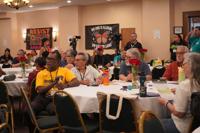
Last week, thousands of Surprise and Maricopa County residents packed the Surprise council chambers, demanding that its members do everything within their power to prevent the facility from becoming operational. A timeline for that has yet to be disclosed by the DHS.
In a statement released prior to the Feb. 3 council meeting, the Surprise City Council said DHS had not contacted local officials about the purchase and therefore members had no idea it had transpired. Due to the supremacy clause in the U.S Constitution, federal projects — such as this proposed detention center in Surprise — are not subject to local regulations, including zoning laws, the statement reads.
“While we do not participate in ICE operations, we also cannot interrupt or prevent their operations,” the statement read.
Resident concerns regarding the detention center come amid a record high of 70,000 ICE detainees in the deportation agency’s 23-year history, according to DHS data obtained by CBS News — with more than 6,000 arrests recorded by ICE in Arizona alone last year, per a CALÓ News analysis. With an approved budget of $170.7 billion and an additional $45 billion expansion of detention facilities, federal officials are reported to be scouting more facilities to hold the increasing number of detainees being abducted by masked ICE agents nationwide.
There are currently 261 known ICE detention facilities operating in the United States — 66 privately operated and 194 county or city-run facilities — according to the Freedom for Immigrants’ interactive Detention Map. While DHS claims to be building these facilities to hold “the worst of the worst,” 74% of all detainees currently in custody have no criminal record, according to data from Transactional Records Access Clearinghouse (TRAC).
The senators and Mayes demanded answers from the DHS to a list of questions, ranging from intended use of the facility to detention standards it will operate off of. Noem and Lyons were given until Feb. 17 to respond.








(0) comments
Welcome to the discussion.
Log In
Keep it Clean. Please avoid obscene, vulgar, lewd, racist or sexually-oriented language.
PLEASE TURN OFF YOUR CAPS LOCK.
Don't Threaten. Threats of harming another person will not be tolerated.
Be Truthful. Don't knowingly lie about anyone or anything.
Be Nice. No racism, sexism or any sort of -ism that is degrading to another person.
Be Proactive. Use the 'Report' link on each comment to let us know of abusive posts.
Share with Us. We'd love to hear eyewitness accounts, the history behind an article.