
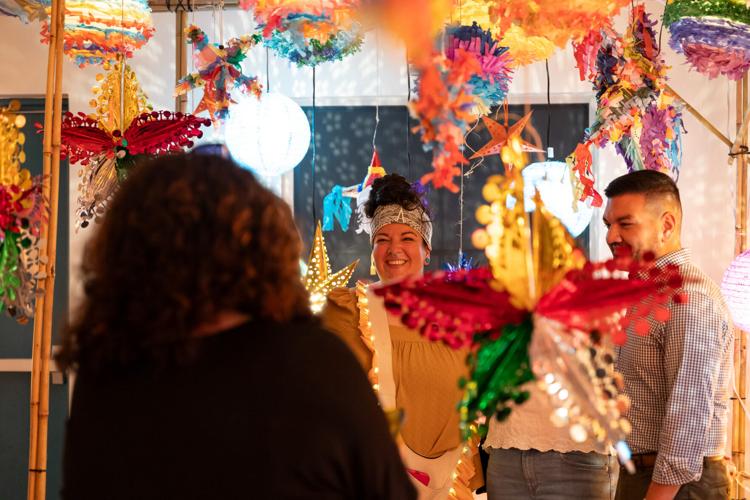
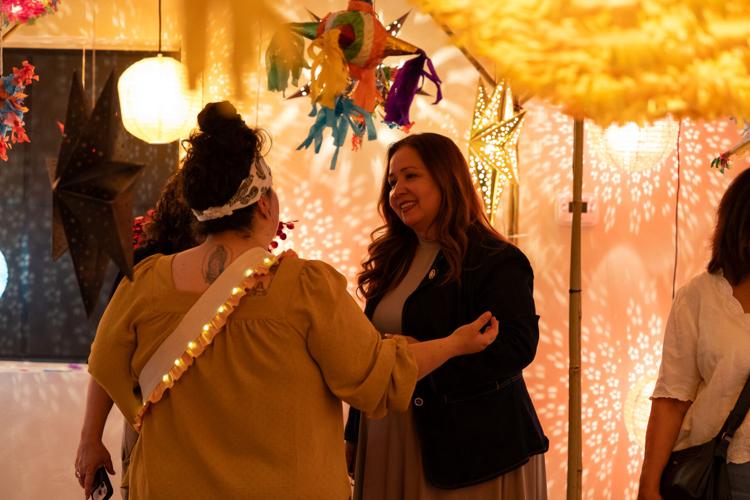

Nelda Ruiz (center), with Southwest Folklife Alliance and Regeneración, and Pima County Supervisor Andres Cano (right) take in the "rasgos asiáticos" art installation being displayed at the Louis Market Center for Cultural Organizing in Tucson, Ariz. (Courtesy of Obsidian Media/Damian Becerra and Southwest Folklife Alliance)
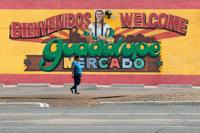
TUCSON – When Christine Cariño was a little girl, her family would pack up their 1980s GMC truck on Friday afternoon and head over to Louis’ Market for snacks. She would get half an orange with a saladito in the middle and some carne seca. The family would then start their almost weekly trip to Sasabe, where her grandfather donated food to residents in the small border town about 80 miles southwest of Tucson. Those childhood memories, from when she was about seven years old until she was 17, have stayed with her.
For a long time, Louis’ Market, on 12th Avenue — known locally as La Doce — just south of Ajo Way, was owned by the Li family. Neighborhood residents remember the owners’ kindness, sometimes giving children free treats and offering “credit lines,” allowing those who couldn’t afford their purchases in the moment to pay when they were able.
Now, the Southwest Folklife Alliance (SFA) in collaboration with Regeneración, a grassroots organizing group in Tucson’s south side, are reimagining the market space alongside the community as a place where neighbors can learn, grow food and rent space for celebrations.
Nelda Ruiz, project manager of cultural organizing with SFA and the co-director of Regeneración, said the new Louis Market Center for Cultural Organizing was born out of a decade of south side organizers identifying the needs in the community. One recommendation that came from talking to more than 200 residents as part of SFA’s “La Doce Barrio Foodways Project” between 2016 and 2018 was collective land ownership, Ruiz said.

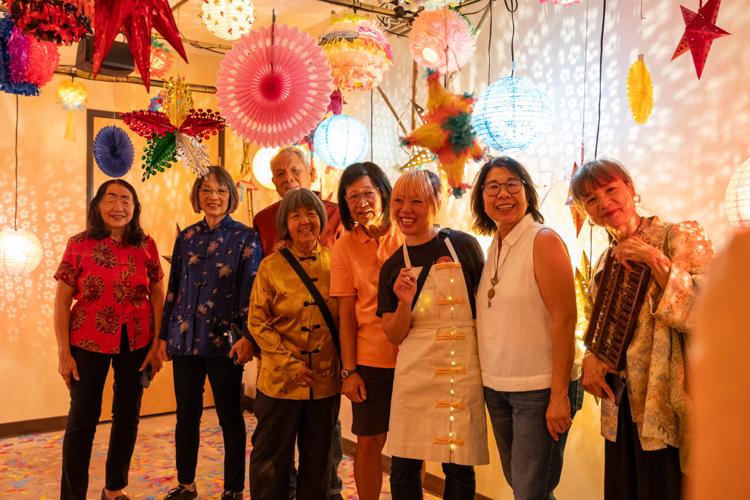
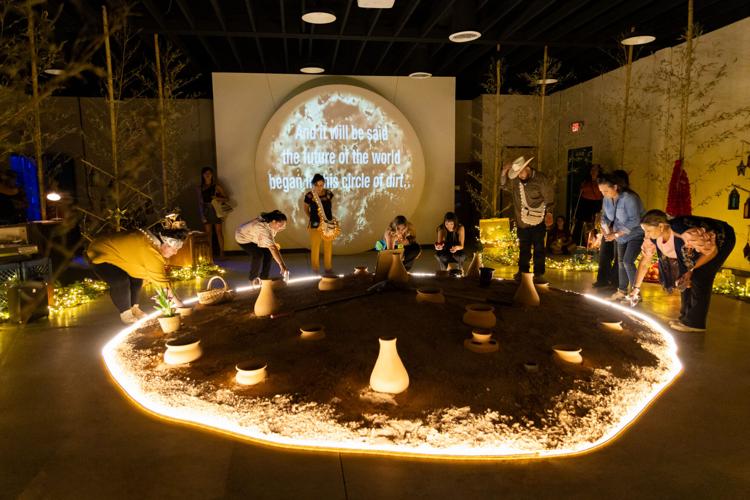
Community members take in the "rasgos asiáticos" art installation being displayed at the Louis Market Center for Cultural Organizing in Tucson, Ariz. (Courtesy of Obsidian Media/Damian Becerra and Southwest Folklife Alliance)
“There's a lot of truths that can exist at once. One is, these beautiful memories of the past. The other are the memories of this space poisoning our community, which is also real,” Ruiz said. “But it's really the beautiful transformative power that we're bringing people along to see themselves reflected in this space and to see themselves as agents of change and being able to create beauty by coming together, by utilizing our culture, by changing the material conditions of our people.”
Opening the space with an art, history exhibit
On April 18, the organizations hosted the center’s grand opening with “rasgos asiáticos,” an art installation that explores the history of Chinese communities in Mexico and along the border.
Cariño, who is president of National City Northwest Neighborhood Association, overseeing the neighborhood between Irvington Road and Ajo Way and between 12th and 6th avenues, grew up in that area. She said the bags of canicas (marbles) that were being gifted to kids took her back to her childhood.
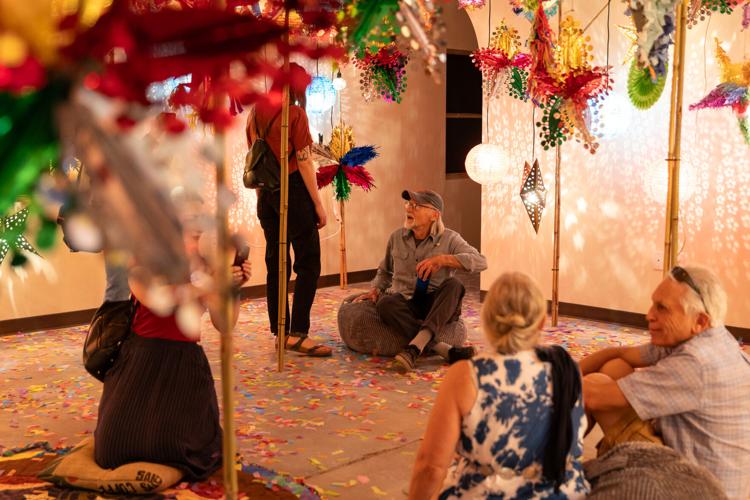
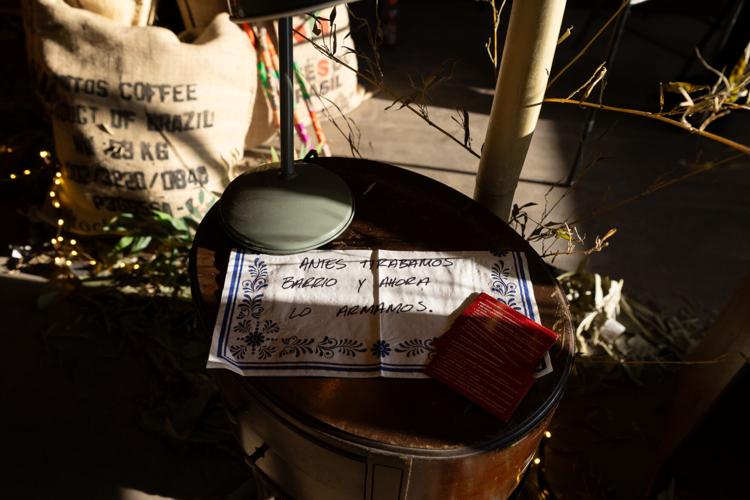
The exhibit will be open to the public until May 28. It includes a “piñata room,” with dozens of colorful lanterns and piñatas hanging from the ceiling. On the floor, a colorful round quilt displays the dreams people have for the space written in black permanent marker: “social justice,” “education,” “motivation,” “superación personal” and “enseñanza, cultura, talentos,” among others.

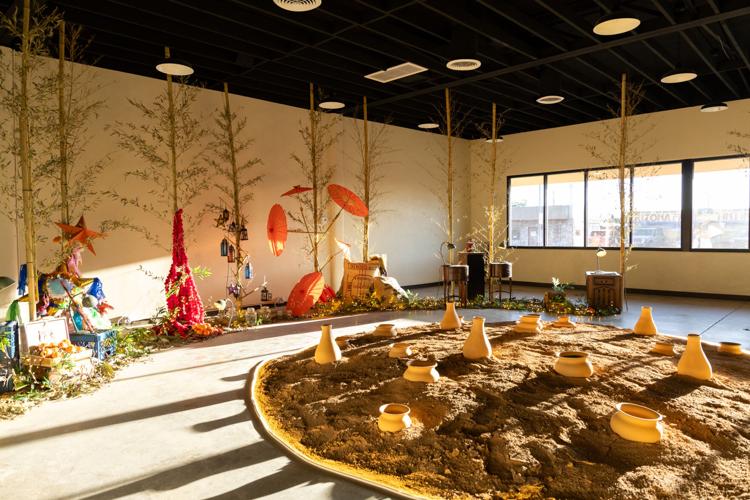
The "rasgos asiáticos," art installation is displayed at the Louis Market Center for Cultural Organizing in Tucson, Ariz. (Courtesy of Obsidian Media/Damian Becerra and Southwest Folklife Alliance)
In between the two buildings that make up the space, wooden boxes with audio and visual elements show visitors vignettes of the shared history of Mexican and Chinese cultures. In the first display, a wooden box with a fence covering it, a voice explains forced Chinese migration into Mexico.
Walking further into the space, a second box holds sand and two large shells at its base, each with a different ocean sound. A third box invites visitors to immerse themselves in a room painted to look like dusk in Arizona, with yellow, orange, pink and blue blending together. Near the back wall of the tiny room, a record player sits on a box and people can listen to the track.
The largest room, the space where Cariño once bought her weekly roadtrip treats, features a large mound of dirt at the center with offerings from community members, similar to an altar. An outer circle features trees, red umbrellas which represent good fortune in Chinese culture and items that for many reflect memories.
A need for collective land ownership
The building has already gone through significant renovations in order to bring it up to code before reopening, Ruiz said. But that was the first of three phases of remodeling plans for the center. The organizers intend to build a commercial kitchen in the space for community use and have a coworking and technology center in the space currently decorated with piñatas. Outside, there will be a shared garden.

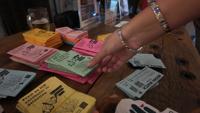
Messages from community members are displayed at the Louis Market Center for Cultural Organizing in Tucson, Ariz. (Courtesy of Obsidian Media/Damian Becerra and Southwest Folklife Alliance)
SFA bought the market for about $600,000 in 2023. In 2024, the alliance and Regeneración started the process of establishing a community land trust focused on green infrastructure rather than housing, Ruiz said. The intention has always been to transfer ownership of the building to the community land trust.
Regeneración is made up of a group of community leaders in the south side of Tucson who have organized barrios for almost 20 years. The group is intergenerational, Ruiz said, with the youngest being seven months old and the oldest 83 years old. They started by addressing food injustice, installing more than 200 backyard gardens and teaching their neighbors how to grow food since 2010. Many of the members worked with other youth in their neighborhoods, teaching them about food systems, food justice and political organizing.
“We've grown up doing this work,” Ruiz said. “When kids would go back to their families talking to them about how they planted a tomato seed, and they saw fruit coming, and they got to taste it right off the plant, and how delicious that was, and how that lit up their lives. They would go back home talking about the work and the parents became interested in learning about what they were doing. And then the families loved the work that we were doing.”
In 2016, Tucson was named the first City of Gastronomy in the U.S. by UNESCO, meaning its food is closely tied to its culture. The Community Food Bank of Southern Arizona and the Southwest Folklife Alliance received funding to document some of that culture on the south side of Tucson. They partnered with Regeneración and hired Ruiz as the project manager for “La Doce Barrio Foodways Project.”

The "rasgos asiáticos" art installation is displayed at the Louis Market Center for Cultural Organizing in Tucson, Ariz. (Courtesy of Obsidian Media/Damian Becerra and Southwest Folklife Alliance)
“We documented the traditions inside people's kitchens along the avenue,” Ruiz said. “But really, our intention was to uplift and center the people, la gente of the south side, whose back that designation was received from and they were nowhere to be found in the recognition.”
The two years of documenting culminated in a report, where three recommendations were made. The first was collective land ownership. Tucson’s south side has a high rate of homeowners, thanks to generational inheritance of homes, but people wanted more ownership of community spaces, Ruiz said.
Another recommendation was the creation of a La Doce fund to be able to acquire more land. The third was the creation of a La Doce council, which would work similar to a city council with representation from each neighborhood so that they can better communicate and support one another.
‘A place that people flourish and grow’
The grand opening of the Louis Market Center for Cultural Organizing featured a series of processions from Barrio Restoration, Lion Dance from the Tucson Chinese Cultural Center, a walk of the ancestors, descendants of the Chinese grocery stores, FUGA and Regeneración. Each group had its own way of honoring and blessing the space, bringing cultural performances and offerings to the exhibit.

U.S. Rep. Adelita Grijalva (D-Ariz.) speaks with Nelda Ruiz (left) as they take in the "rasgos asiáticos" art installation being displayed at the Louis Market Center for Cultural Organizing in Tucson, Ariz. (Courtesy of Obsidian Media/Damian Becerra and Southwest Folklife Alliance)
Members of FUGA, or Familias Unidas Ganando Accesibilidad (Families United Gaining Accessibility), took rusty tools and bike parts as an offering, said Vanessa Gallego Lujan, co-founder of the group. They hope to host bike repair workshops for the community at Louis Market, she said.
Around 8 p.m. bicyclists with FUGA, ended a 9-mile ride along 12th Avenue by riding around the market. This was the group’s procession. Riders blasted the Latin indie song “Renacer” by Bardo Martinez featuring Combo Chimbita as they circled the center.
The song and the message behind it was another of FUGA’s offerings, Gallego Lujan said. Their energy and sweat after a long bike ride, representing the sweat and work they will contribute to ensuring the center’s success, was another.
“We know that energy that we've all intentionally set on the grand opening,” Gallego Lujan said. “And that this is going to be a safe space. This is going to be a place that people flourish and grow, literally, food’s going to grow. Their minds are going to grow with that technological center. Ideas will be shared.”

Community members take in the "rasgos asiáticos" art installation being displayed at the Louis Market Center for Cultural Organizing in Tucson, Ariz. (Courtesy of Obsidian Media/Damian Becerra and Southwest Folklife Alliance)
Stephanie Casanova is an independent, bilingual journalist from Tucson, Arizona, covering community stories for over 10 years. She is passionate about narrative, in-depth storytelling that is inclusive and reflects the diversity of the communities she covers.





(0) comments
Welcome to the discussion.
Log In
Keep it Clean. Please avoid obscene, vulgar, lewd, racist or sexually-oriented language.
PLEASE TURN OFF YOUR CAPS LOCK.
Don't Threaten. Threats of harming another person will not be tolerated.
Be Truthful. Don't knowingly lie about anyone or anything.
Be Nice. No racism, sexism or any sort of -ism that is degrading to another person.
Be Proactive. Use the 'Report' link on each comment to let us know of abusive posts.
Share with Us. We'd love to hear eyewitness accounts, the history behind an article.