
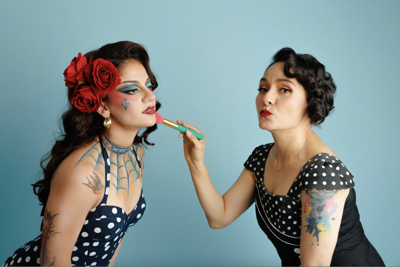

Mosaicos, a visual and narrative exhibition, is on display in Tucson. The glamour is captured by Betto Robles. (Photo provided by Betto Robles)
Meme García lifts her brush with precision. A stroke of blue across the eyelids. Crimson red on the lips. And in a matter of minutes, a face transforms into a narrative. Garcia’s work in makeup doesn’t just create characters — it crosses borders, taking her from stages in Sonora to Hollywood, where her talent turns skin into a canvas and identity into art.
“She worked on the film “Apocalypto” by Mel Gibson,” says Betto Robles, the man behind the camera who captured the essence of the makeup artist as she transformed her partner, Mayra Mungarro, with a 1950s pin-up model style.
Betto joins Daniel Robles as the primary photographers of Mosaicos, a visual and narrative exhibition arriving in Tucson on April 23 at the Tucson Jewish Museum & Holocaust Center as a bicultural event.
Driven by the local news outlet Conecta Arizona, the Mosaicos project seeks to piece together moments of life, color and memory into a portrait that celebrates migrant and cross-border beauty.
“Last year, for Hispanic Heritage Month, we were thinking about what kind of project we could create that would represent the beauty of Hispanics in the United States. That’s how we came up with a photo essay project that would bring us closer to migrant beauty,” says Maritza Félix, director and founder of Conecta.
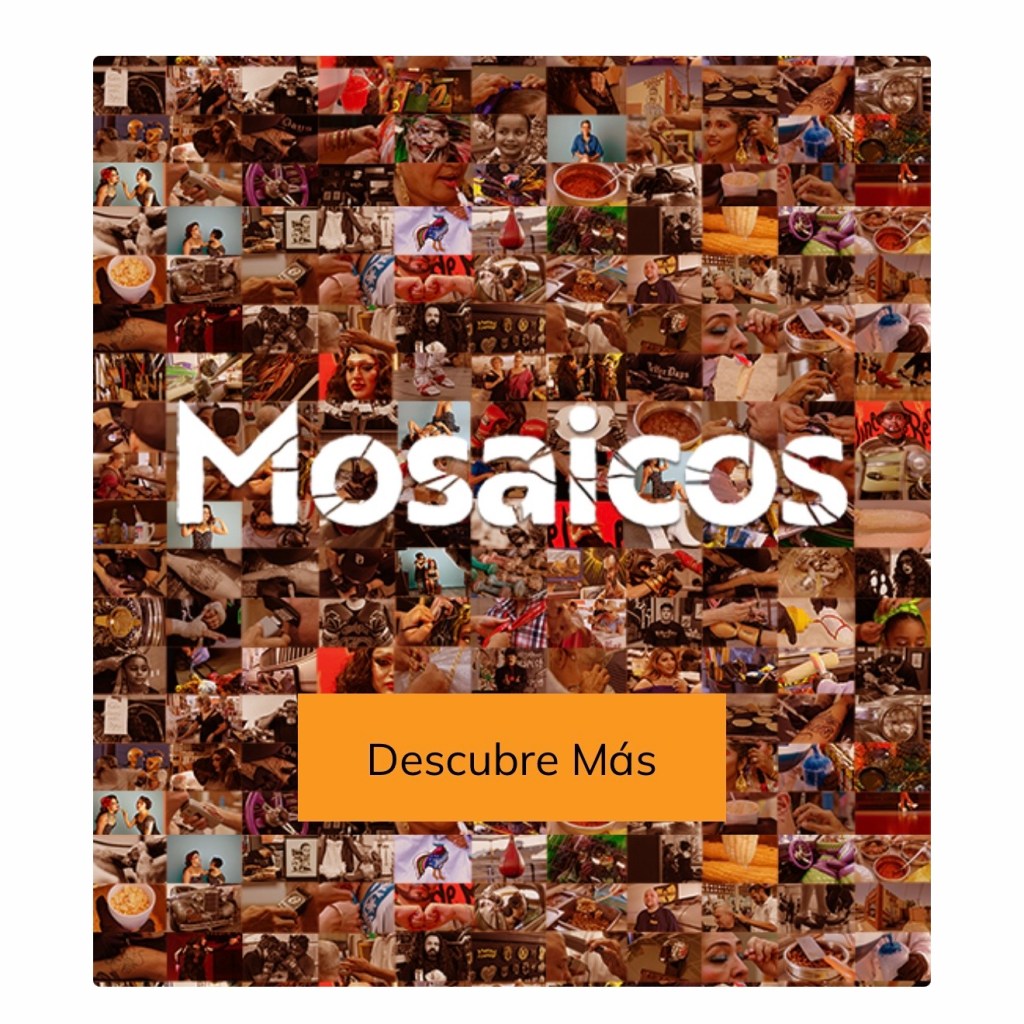 Mosaicos, a visual and narrative exhibition, is presented in Tucson.
More than a dozen themes were selected, she says, as “a tribute to our faces and our colors, to the flavors and pains, to the smells and the memories that make us vibrate and move through us in this crossing of the border.”
That’s how themes of glamour, cowboys, tacos, and tattoo ink are transformed into art through Betto’s camera lens. And concepts of song, pride, barbers, theater, corn, boxing, painting, dance, and lowriders are captured by Daniel’s lens.
Betto and Daniel are both professional photographers and brothers. They created the images for the border project. Betto from Hermosillo, Daniel from Phoenix — united by a shared vision across the Sonoran Desert.
“Here, Mexican culture blends somewhat with that of the United States,” Betto says of Hermosillo. “The closest border is Nogales; we’re less than four hours from the border.” Sonora’s bicultural atmosphere is woven into its communities, he says.
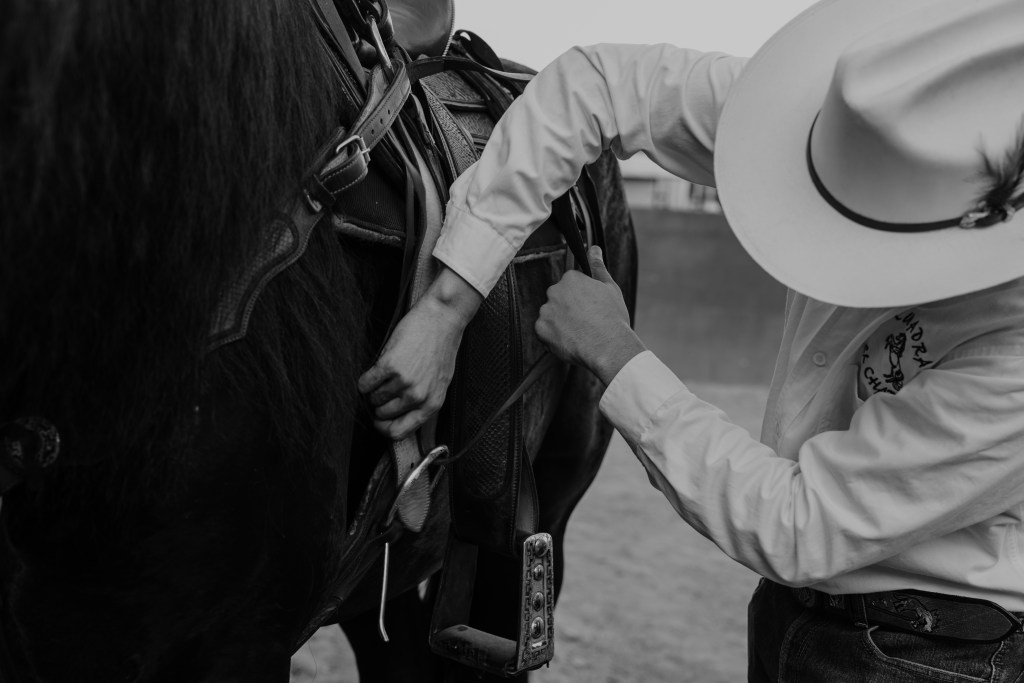 Mosaicos, a visual and narrative exhibition, is on display in Tucson. The cowboy is captured by Betto Robles.
In addition to the photographs of living themes and creators, the exhibition incorporates texts and poetry from journalists and artists writing for Conecta Arizona, a media outlet that documents stories from Latino and borderlands communities. This combination of image and word aims to offer a deeper, more reflective experience of Latino heritage and pride for the public.
Artistic collaborators Javier Castro Fragoso, Valeria Fernández, Arianny Valles, Judith León, Jonathan Calixto, Mario Zapién, Kelly Key, Celia Montoya, Ana Lissardy and Félix build a narrative based on images and characters captured on both sides of the border.
 Mosaicos, a visual and narrative exhibition, is on display in Tucson. The ink is captured by Betto Robles.
What will the public find in the Mosaicos exhibition? Betto answers without hesitation: “A bit of the essence of people doing something — with a craft or an art — the essence of people who are creating.”
“News stories about migration and current problems are always being made, and they wanted to move away from that and look for the essence of everyday situations,” says the 44-year-old Mexican photographer.
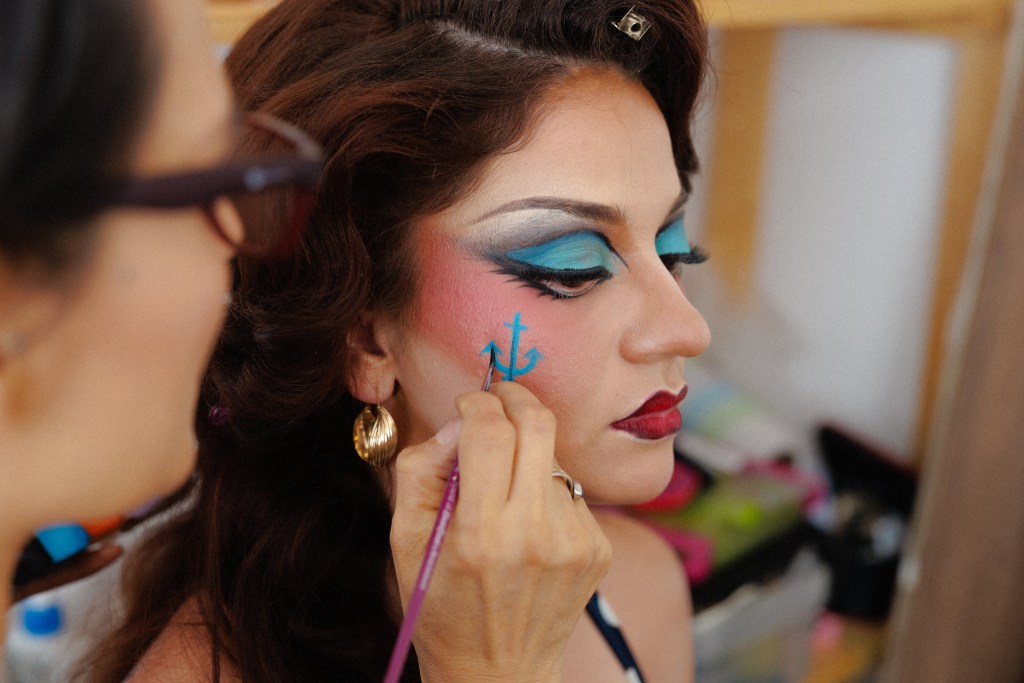 Mosaicos, a visual and narrative exhibition, is on display in Tucson. The glamour is captured by Betto Robles.
García sharpens the brush and, gently, draws a turquoise boat anchor on Mayra’s cheek. It matches the model’s painted eyelids, as she seems to glance toward an unknown horizon.
“This is where the brush does its work,” writes author Kelly Key for Mosaicos’ El Glamour piece, “because only those who inhabit the territory truly know it and dare to carve identity with every stroke…”
📍 Event details
🗓️ Date: April 23, 2026
🕕 Time: 5 p.m. - 7 p.m.
📌 Location: Tucson Jewish Museum & Holocaust Center, 564 S. Stone Ave.
🎟️ Admission: Free (registration required)
This article first appeared on AZ Luminaria and is republished here under a Creative Commons Attribution-NoDerivatives 4.0 International License.




(0) comments
Welcome to the discussion.
Log In
Keep it Clean. Please avoid obscene, vulgar, lewd, racist or sexually-oriented language.
PLEASE TURN OFF YOUR CAPS LOCK.
Don't Threaten. Threats of harming another person will not be tolerated.
Be Truthful. Don't knowingly lie about anyone or anything.
Be Nice. No racism, sexism or any sort of -ism that is degrading to another person.
Be Proactive. Use the 'Report' link on each comment to let us know of abusive posts.
Share with Us. We'd love to hear eyewitness accounts, the history behind an article.