
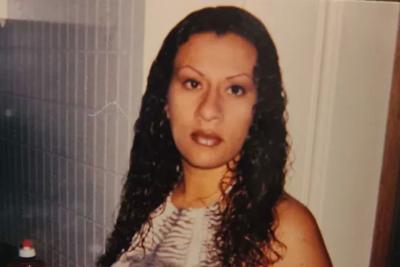


(GoFundMe)
A year has passed since Lucrecia Macias Barajas, a veteran, a neighbor, a human being who once served her country, died on the streets of Los Angeles. The anniversary is not just a footnote; it is an indictment. Lucrecia's death should trouble us not only because of who she was, but because of what it says about the systems we allow to fail the people they are meant to protect.
We like to imagine veterans as a protected class: honored at parades, promised care and benefits when they return home. The reality for far too many is a different story. Lucrecia's life and death expose the gap between rhetoric and reality. She is one of the many veterans who slid through that gap into homelessness, into invisibility, into a city that has the resources to intervene but too often lacks the political will and coordinated systems to do so effectively.
Los Angeles has spent billions addressing homelessness, and yet the crisis deepens. The problem is not only funding, it is fragmentation. Responsibility is scattered among Veterans Administration (VA) programs, county services, city initiatives, nonprofits and an overwhelmed emergency system. For veterans like Lucrecia, who often face complex combinations of trauma, mental health challenges and economic precarity, patchwork approaches are deadly. When services require navigation through labyrinthine intake processes or when housing is promised but not available, people fall through the cracks.
There's also the human cost of treating homelessness as a problem to be managed rather than people to be reached.
Meanwhile, stigma and indifference make it easy for a society to accept a veteran's death as inevitable rather than preventable.
As the former head of the Los Angeles Red Cross, I know that there is a better way.
We must demand better on three fronts.
First, coordinate benefits and outreach specifically for veterans. The VA provides crucial services, but access is uneven. Mobile, trauma-informed outreach teams that pair veterans with case managers who can immediately navigate benefits, housing vouchers and mental-health care can make the difference between life and death. These teams should operate under measurable standards, with performance tied to rapid housing placement and retention.
Second, invest in short, medium and long-term supportive housing, an all of the above approach. Evidence shows that temporary housing models, paired with wraparound services, reduce chronic homelessness and improve health outcomes. L.A.'s housing pipeline must prioritize units tied to supportive services for veterans and funding streams should be simplified so nonprofit providers can scale what works.
Third, treat homelessness as a public-health and human-rights issue, not merely a criminal or aesthetic problem. Expand low-barrier access to mental-health and addiction treatment, integrate primary care with outreach and remove administrative hurdles that delay benefit access. Cities must adopt humane policies that keep people connected to community and care, not push them further into isolation.
But policy changes alone will not suffice.
Remembering Lucrecia requires a moral commitment to seeing each person's story. It means recognizing that the woman who died on a sidewalk had relationships, a past and a dignity that was never fully respected by the system intended to serve her.
Commemoration must go beyond moments of silence; it should spur concrete reforms and support for grassroots organizations that build trust with people on the margins.
Finally, accountability matters. That's why I am calling on Los Angeles to rename LAMC 41.18 to the Lucrecia Macias Act, to honor this veteran, mother, daughter and fellow human being.
Lucrecia's death should resonate as a call to action.
We honor veterans by more than ceremonies; we honor them by ensuring they are never left to die alone on our streets. If Los Angeles, with its wealth and civic capacity, cannot protect those who served, what message does that send about our priorities as a society? Let Lucrecia's memory be the spur to fix the systems that failed her so the next veteran in need finds a city ready to keep its promise.







(0) comments
Welcome to the discussion.
Log In
Keep it Clean. Please avoid obscene, vulgar, lewd, racist or sexually-oriented language.
PLEASE TURN OFF YOUR CAPS LOCK.
Don't Threaten. Threats of harming another person will not be tolerated.
Be Truthful. Don't knowingly lie about anyone or anything.
Be Nice. No racism, sexism or any sort of -ism that is degrading to another person.
Be Proactive. Use the 'Report' link on each comment to let us know of abusive posts.
Share with Us. We'd love to hear eyewitness accounts, the history behind an article.