
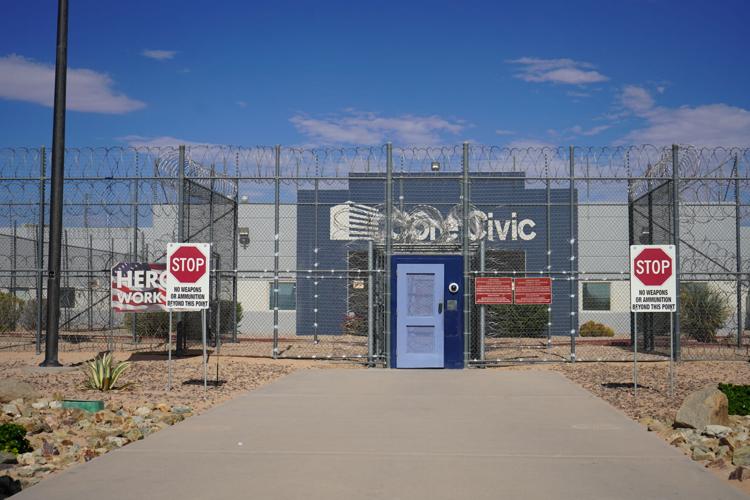
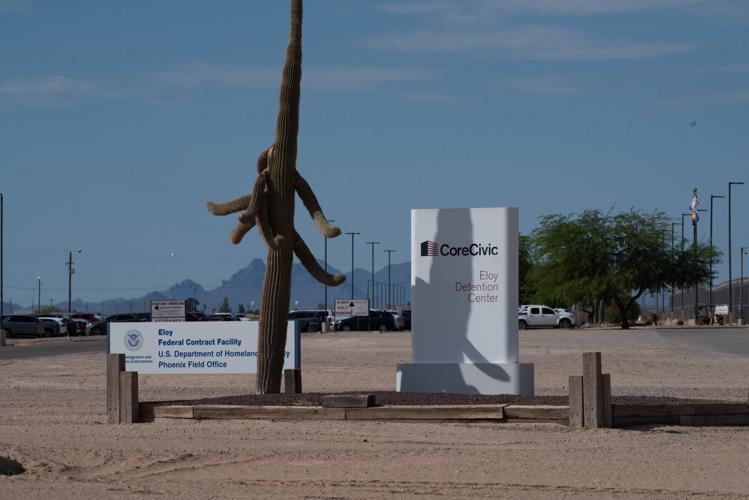

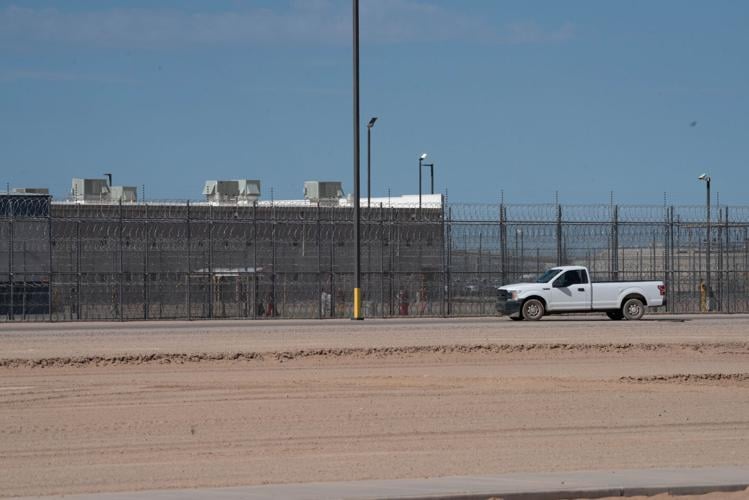
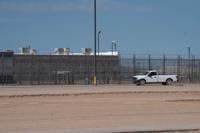

The exterior fence at Eloy Detention Center, owned by CoreCivic, a private prison company that reported record profits in 2025. The detention center in Eloy, Arizona, can hold over 1,550 people, according to the Global Detention Project. (Susan Barnett/CALÓ News)
From January to July 2026, people detained in three Arizona immigration detention centers reported at least 64 cases of abuse and neglect. The cases, brought to light in the “A Place of Repression and Torture for Immigrants” report, range from chronic illnesses, medical abuse and miscarriages to overcrowding and unsanitary and inhumane conditions.
The Florence Immigrant and Refugee Rights Project, the author of the report, is a nonprofit organization that provides free legal services, social services and advocacy to detained adults and unaccompanied children facing immigration removal proceedings in Arizona. The recent six-month report is the result of the organization’s constant contact with people detained inside the detention centers.
At a time when billions of dollars are pouring into private prisons for detention, local advocacy organizations are sharing what they’ve heard from people detained.
In one instance, a 24-year-old man arrested while on his way to chemotherapy had to spend six months in detention while fighting serious blood cancer and acute lymphoblastic leukemia. The report alleges that the man spent most of his time receiving treatment handcuffed to his hospital bed or healing in medical isolation in Florence Detention Center. Additionally, his case was rescheduled ten times because of medical care and isolated recovery, prolonging his stay. After six months, an immigration judge released him.

The exterior fence at Eloy Detention Center, owned by CoreCivic, a private prison company that reported record profits in 2025. The detention center in Eloy, Arizona, can hold over 1,550 people, according to the Global Detention Project. (Susan Barnett/CALÓ News)
In another instance, a pregnant woman had a miscarriage while in detention and reported severe medical and mental health consequences, including hallucinations of her holding the baby and voices telling her to hurt herself.
And earlier this year, Emmanuel Damas, a 56-year-old Haitian national and asylum seeker, died in a Florence detention center.
CALÓ News has reported on people who’ve been detained for months, including the case of Arabella “Yari” Rodriguez Marquez — a woman with leukemia who’s been detained in Eloy Detention Center since February 2025 — and Marta Alicia Dominguez, who’s been detained for over a year, despite filing for a habeas corpus, a legal process used to argue unlawful detention.
“Immigration detention is inherently inhumane and violent, and this has only been exacerbated under this administration and with the lack of independent oversight mechanisms,” the report states. “The Florence Project continues to call on elected officials to advocate for humane immigration reform and to end immigration detention.”
Across the country, private prison companies have gotten contracts with the federal government to build, expand or lease properties to detain immigrants, a keystone of President Donald Trump’s hardline immigration enforcement stance and the sweetheart deal for prison companies of the “One Big Beautiful” Bill Act, which designated billions of dollars for enforcement and detention.
There are almost 66,000 people in detention centers across the country; 70% detained have no criminal history, according to TRAC Reports.
So far, Immigration and Customs Enforcement (ICE) has reported 24 deaths in custody in 2026.
“Being in detention is a choice. We encourage all illegal aliens to take control of their departure with the CBP Home App. The United States is offering illegal aliens $3,000 and a free flight to self-deport now,” a Department of Homeland Security spokesperson said in a statement to CALÓ News. “We encourage every person here illegally to take advantage of this offer and reserve the chance to come back to the U.S. the right legal way to live the American dream. If not, you will be arrested and deported without a chance to return.”

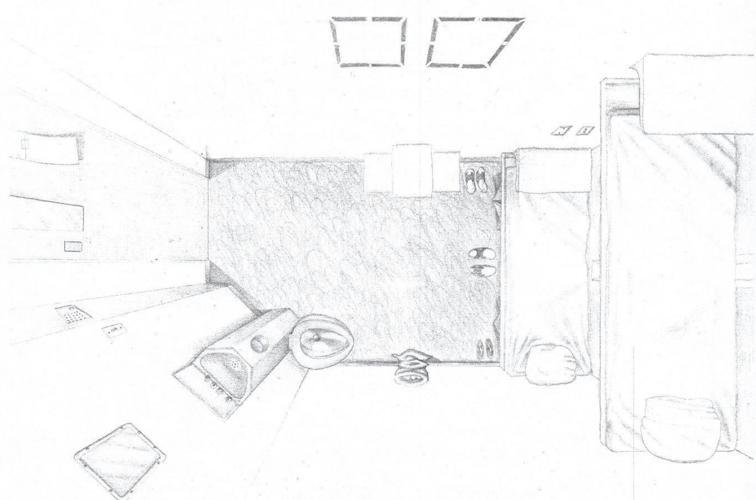
Artwork by a Florence Project client offers a bird's-eye view of a cell in an immigration detention center. (Illustration courtesy of The Florence Project)
Detention center’s doors opening soon
The Florence Project’s report comes just as Management and Training Corporation (MTC), a private prison company, is set to open the former Marana prison as an immigration detention center within 60 days.
A joint investigation from LOOKOUT and The Intercept found that MTC had previously run that facility as a prison and had covered up allegations of sexual abuse by a staffer, as well as similar poor conditions in other MTC-owned facilities. The report cites a lack of air conditioning during summer months, and the necessity for prisoners to feed squirrels corn flakes to fatten them and eat them for extra calories because of the substandard meals they were receiving.
That investigation leaves a bad taste for those already doubtful about how the detention center in Marana will operate once it’s up and running.
“This latest scandal, combined with the company's history of escapes and riots, shows what we have been saying all along: that MTC's practices are anything but humane,” said Kristin Downing, an organizer with Pima Resists ICE (PRICE). “Any facility run by MTC will be inherently unsafe.”
A DHS spokesperson said any claims of mistreatment, lack of adequate medical care, overcrowding or subprime conditions at ICE facilities are “categorically false.”

Eloy Detention Center, owned by CoreCivic, is a private prison company that reported record profits in 2025. The detention center in Eloy, Arizona, can hold over 1,550 people, according to the Global Detention Project. (Susan Barnett/CALÓ News)
“ICE has higher detention standards than most US prisons that hold actual US citizens. ICE is regularly audited and inspected by external agencies to ensure that all ICE facilities comply with performance-based national detention standards,” said a DHS spokesperson. “All detainees are provided with proper meals, quality water, blankets, medical treatment, and have opportunities to communicate with their family members and lawyers.”
However, at the same time that the Trump Administration has injected billions of dollars into immigration enforcement and detention, it has withdrawn funding — and in some cases entirely shut down — regulatory oversight agencies, as it did earlier this year when it ended the Office for Civil Rights and Civil Liberties (CRCL), the Office of the Immigration Detention Ombudsman and the Office of the Citizenship and Immigration Services Ombudsman.
These agencies were charged with investigating detainee deaths, detainee access to medical care and employee misconduct, among other issues. Their defunding was justified by saying it was “obstructing immigration enforcement by adding bureaucratic hurdles”, according to then-DHS spokesperson Tricia McLaughlin.
“With essentially no oversight, it is nearly impossible for individuals in detention to get any assistance for urgent issues like medical neglect or abuse,” the Florence Project report states. “ICE and CoreCivic have been allowed to operate with impunity and with no consequences or accountability, which has not only resulted in inhumane conditions but has put people’s health and lives at risk in detention.”
These kinds of reports are not unique to Arizona immigration detention centers. Similar reports of medical neglect, overcrowding, inedible food and unsanitary conditions have been made in at least 33 states.
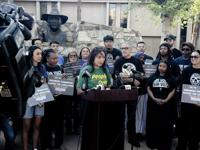
“Our communities are tired of our taxpayer dollars being wasted on private detention centers to meet arbitrary deportation quotas,” said Congresswoman Adelita Grijalva at a press conference. “We are tired of seeing private companies profit off of Trump's cruel and inhumane immigration agenda. While the federal government operates in secrecy, local residents and their elected public officials across the country are pushing back against these facilities… We will continue asking questions and we will continue to mandate accountability.”
Susan Barnett is an independent journalist in southern Arizona covering the immigrant and Latine community. She is a recent graduate from the University of Arizona, where she received her Master of Arts in Bilingual Journalism. She previously worked at La Estrella de Tucson and co-founded Tucson Spotlight.








(0) comments
Welcome to the discussion.
Log In
Keep it Clean. Please avoid obscene, vulgar, lewd, racist or sexually-oriented language.
PLEASE TURN OFF YOUR CAPS LOCK.
Don't Threaten. Threats of harming another person will not be tolerated.
Be Truthful. Don't knowingly lie about anyone or anything.
Be Nice. No racism, sexism or any sort of -ism that is degrading to another person.
Be Proactive. Use the 'Report' link on each comment to let us know of abusive posts.
Share with Us. We'd love to hear eyewitness accounts, the history behind an article.