
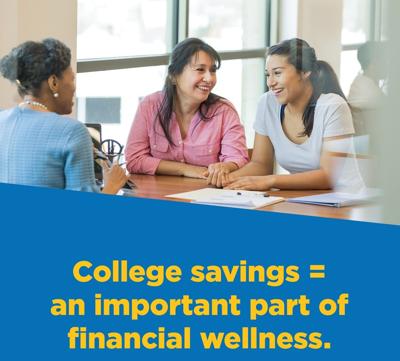



California offers savings programs for college. (CA Treasurer)
With Christmas this week and New Year’s around the corner, many people are still debating on meaningful gifts. While the ideal is to focus on toys and other materialistic items, experts indicate that one of the best gifts children and young adults can receive is a savings account.
In many states, including California, state-backed savings programs help children and young adults build real financial security, but many people don't even know they exist.
California State Treasurer Fiona Ma spoke about some of the available programs in the Golden State.
ScholarShare 529, also known as the 529 college fund, is an account for college education. The investments grow tax-deferred, and withdrawals for qualified expenses like college education or vocational programs are tax-free at the federal level, with potential additional state tax breaks.
“When you open an account, you can get a gift link and send that link around to your friends and family and encourage them to put money into college savings or apprenticeship programs versus buying a gift that the child will look at maybe for a couple of hours,” said Ma.
She calls it “a set it and forget it model” because you decide how much money you want to deduct from your paycheck or your bank account every month and that’s it. The account creates compounding interest, meaning it is intended to grow as you put more money in.
For example, if a parent saves $100 a month for 18 years in a ScholarShare account, that money could grow to about $65,000.
“That will help keep young people out of high student loan debt,” said Ma.
She said the amount can be smaller than $100, but won’t accumulate as much. And once the consumer deducts it out of their paycheck or bank account, they just tend to forget about it.
Another account available in California is the Achieving a Better Life Experience (CalABLE) account, a tax-advantaged savings/investment account for individuals with disabilities. CalABLE allows them to save money for disability-related expenses without jeopardizing eligibility for public benefits like Supplemental Security Income (SSI) or Medicaid. The funds grow tax-free and distributions are tax-free when used for Qualified Disability Expenses (QDEs).
From 2019 to 2025, the age limit was 26 years old, but starting January 1 the program has an increased age of 46 years old.
“If you are diagnosed with a disability before 46 years old, you can now open up a savings account similar to a post-tax Roth IRA type account and you can accumulate up to $19,000,” she said.
This is a game-changer, as before a person with a disability could only have up to $2,000 in a savings account.
“So if you're a mother with a disabled child, all your life you're worried about that child because they can never have assets. They don't have a bank account, they cannot have a house, they cannot have any stocks. You cannot save money,” she said. “And in case something happens to the parents, the child is out there without anything.”
Now they can save money in their own name, in their own accounts for the first time.
The CalAble accounts can also receive monetary gifts via online or check. The owner just has to set up a personalized gifting page or provide a gift form to friends and family,
Accounts without gift links
The CalKids program is $500 state money for any 1st through 12th grader on free and reduced lunch.
“They just have to claim it with their student ID number. If they are homeless, they get another $500 and if they're a foster youth, another $500,” Ma said. “We want this child to have a better life, higher education, [an] apprenticeship program, so we are putting aside money so that they will think about it in the future.”
And CalSavers is a program available to employees whose job does not provide a retirement savings account.
The employer must enroll with CalSavers. The savings are usually about 5% of the person's salary, but they can increase it, decrease it or even opt out of the program.
“This is really a tool that small businesses or nonprofits are now using to promote to their workers,” said Ma. “They do not have to administer a very complicated and expensive pension plan for their employees anymore.”
Lastly, the California HOPE (Hope, Opportunity, Perseverance, Empowerment) account is focused on children who lost parents to COVID-19 or longtime foster youth in the system for 18 months or more, who receive a one-time $3,000 to fund their education, housing or business, aiming to close wealth gaps and build economic stability.
This program is expected to start in the first quarter of 2026.
For more information on these programs, visit www.treasurer.ca.gov/programs.asp






(0) comments
Welcome to the discussion.
Log In
Keep it Clean. Please avoid obscene, vulgar, lewd, racist or sexually-oriented language.
PLEASE TURN OFF YOUR CAPS LOCK.
Don't Threaten. Threats of harming another person will not be tolerated.
Be Truthful. Don't knowingly lie about anyone or anything.
Be Nice. No racism, sexism or any sort of -ism that is degrading to another person.
Be Proactive. Use the 'Report' link on each comment to let us know of abusive posts.
Share with Us. We'd love to hear eyewitness accounts, the history behind an article.