
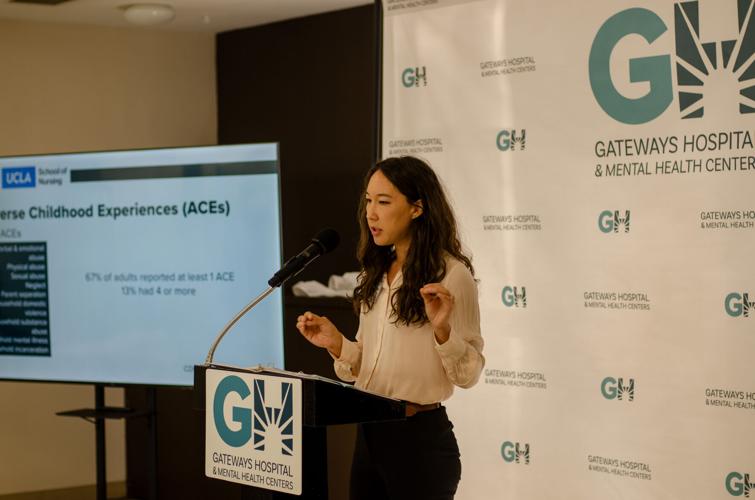





Kristen Choi (PhD, PMHNP-BC, FAAN, Gateways Hospital and Mental Health Centers).
Nurse Maria Sanchez often sees the hesitance from Latino families when it comes to talking about mental illness. Some of the main factors are stigma and culture. However, the clinical education manager at Gateways Hospital in Echo Park has learned the importance of approaching people with compassion, in Spanish if needed, and with an understanding of the culture and background of migrant families.
As a Mexican American, Sanchez can identify because she faced some of these same factors growing up. Her father was a gardener and her mother was a housekeeper. They worked long hours, and when they got home, they weren't much available for the children.
"They had their own struggles, and perhaps their own mental illnesses that they were dealing with, but were not addressing," she said. "Sometimes my dad was working in high temperatures, and we had to understand that he was tired and had no energy to deal with us."
Sanchez was able to cope with life and did her best to succeed. However, not all children grow up with the same tenacity, and that's why experts indicate intervention at an early age is essential.
Research shows about 63.9% of Americans have experienced at least one potentially traumatic event, also known as an Adverse Childhood Experience (ACE), before turning 18. These ACEs are linked to long-term mental and physical health challenges, underlining the importance of trauma-informed care in the healthcare sector, according to the Centers for Disease and Control Prevention (CDC).
In Los Angeles, a study conducted by Gateways Hospital and UCLA revealed that 94% of youth in the sample had at least one ACE, with 79% facing additional stressful life events.
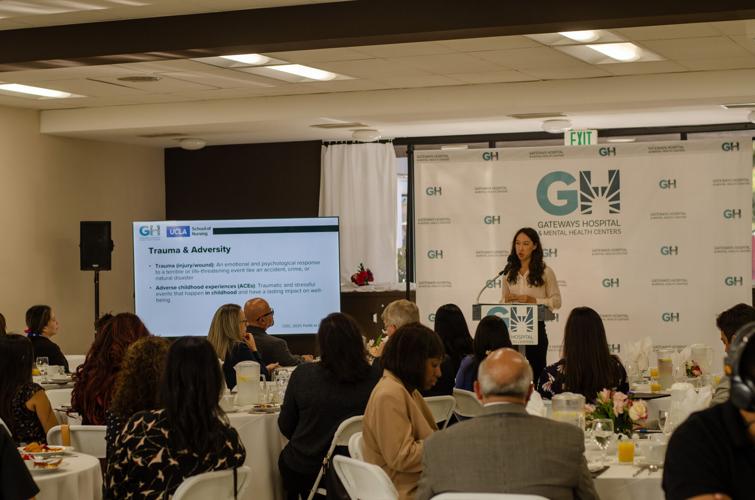
The research, presented at the beginning of the month by its authors Kristen Choi, Elizabeth Morris and Meredith Mead, revealed that trauma, especially at a young age, can leave a lasting impact on physical and mental health, increasing an individual's likelihood of having a stroke, cancer or heart disease.
The National Institutes of Health (NIH) revealed that about six percent of the U.S. population will have Post-Traumatic Stress Disorder (PTSD) at some point in their lives. Still, many of these individuals will not receive adequate treatment.

Kristen Choi (PhD, PMHNP-BC, FAAN, Gateways Hospital and Mental Health Centers).
In Gateways Hospital, located in Echo Park, more than half of patients are Latino. Sanchez said this is why it's crucial to normalize mental health and talk about therapy and medication if needed.
"I explain to them that taking medication for their mental illness is the same thing as taking medication if you have diabetes or hypertension," she said. "It proves how beneficial it would be for the child in their social life, academically, and even at home in their relationships with family and friends."
Why addressing ACEs is important
The research titled "Applying Adverse Childhood Experience (ACE) Screening in Adolescent Inpatient Mental Health" indicates there is a relationship between ACEs and poor health outcomes and that's why more resources are needed.
The research identified that one in three children received a new diagnosis of PTSD during hospitalization and 56% of them had four or more ACEs, indicating a high risk for toxic stress and the need for targeted interventions.
Choi, a psychiatrist nurse at Gateways, said communities have to work together to remove the stigma around mental health since it's a challenging topic to mention. Both Sanchez and Choi agreed that children are more comfortable talking about it and have requested their parents to let them get the help needed, whether it is therapy or medication.
"We just have to normalize that it's okay not to be okay. It's okay to ask for help and to need treatment, and that it's not a sign of weakness," said Choi.
However, with every petition for help, it is important to get the family involved. That's why Choi said it is vital to bring families into those conversations, mainly to take a deeper dive into understanding the issues that are going on and why treatment is important.
"I think being able to work in that collaborative way is also really important, because kids need their families to be supporting them [in knowing that] what it takes to be mentally well is not just the services that they get in this hospital. It's going to be everything about their lives," she said.
Younger patients ask for help
Choi said the majority of children who arrive at the hospital are in crisis, usually for suicide attempts. When they are hospitalized, even if it's for a short period, medical staff can stabilize a crisis and identify the trauma.

"The reality is, in the short time that kids are in the hospital, we are not going to resolve a lifetime of trauma, right?" she said. "But this is a place where we can maybe identify a problem that hasn't been seen and help connect them to resources to move forward."
Learning about children of different backgrounds also helps medical experts understand certain cases more clearly. Choi said she has seen many cases of children at the detention centers that have experienced serious immigration trauma. Others have experienced traumatic grief and loss, either when crossing the border or witnessing their parents’ or a family members' death.
"We also have a lot of kids that might have experienced bullying and school violence, things that don't always get assessed," said Choi.
The research findings recommended it is important to look at trauma in a very comprehensive way and think of what not only happens at home but also within the community in which they live.
In Sanchez' nursing experience some of the higher topics among adolescents are identity issues, gender issues, their sexuality and depression.
"I see that they don't want to speak to their families, because it's not very accepting in our community," said Sanchez. "But I have also seen kids beg their parents. I've seen them ask for therapy, but sometimes their parents don't agree, because, again, they think that by medicating them, they're going to become addicted."
More resources needed
An important piece of this puzzle is clinical training for nurses. While nurses are the largest healthcare profession in the country and are a vital part of the mental healthcare workforce, there are still some severe provider shortages. Therefore, the recommendation is that nurses get training early in mental health care and help them think about careers in mental health. It's critical to fill those provider shortages and address some gaps in trauma-informed care.
Choi said some nursing students from UCLA are getting experience at Gateways. This is particularly important because the nurse students get to experience the difference between treating patients of diverse backgrounds in areas like Echo Park versus the Westwood area, which has a more affluent population.
During the presentation, Senator Alex Padilla was also commended for championing a $500,000 funding allocation from the Substance Abuse and Mental Health Services Administration (SAMHSA) to expand Gateways' and UCLA's training initiatives for mental health professionals in Trauma-Informed Care (TF-CBT). This will permit more individuals who have experienced trauma to access comprehensive and trauma-informed mental health services.










(0) comments
Welcome to the discussion.
Log In
Keep it Clean. Please avoid obscene, vulgar, lewd, racist or sexually-oriented language.
PLEASE TURN OFF YOUR CAPS LOCK.
Don't Threaten. Threats of harming another person will not be tolerated.
Be Truthful. Don't knowingly lie about anyone or anything.
Be Nice. No racism, sexism or any sort of -ism that is degrading to another person.
Be Proactive. Use the 'Report' link on each comment to let us know of abusive posts.
Share with Us. We'd love to hear eyewitness accounts, the history behind an article.