



(Canva)
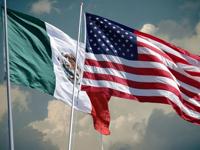
The CaliBaja Higher Education Consortium (CHEC), a cross-border alliance that brings together 17 universities, research centers, diplomatic partners, business leaders and community organizations from California and Baja California, will be officially launched on December 12 at UC San Diego Park & Market.
Representatives from both sides of the border will gather to present this initiative aimed at strengthening academic collaboration, increasing student and faculty mobility, promoting joint research and fostering innovation across the CaliBaja region.
The University of California, San Diego is a member of the consortium’s steering committee, which also includes Centro de Enseñanza Técnica y Superior (CETYS), Universidad Autónoma de Baja California (UABC) and San Diego State University (SDSU), as well as both consulates.
CHEC represents a major step toward formalizing long-term cross-border cooperation in one of the most interconnected binational regions in the world. The initiative is designed to enhance student and faculty mobility, bolster research networks and support the development of a highly skilled binational workforce equipped to address shared challenges.
“Education and research build bridges that turn borders into opportunities,” said UC San Diego chancellor Pradeep K. Khosla. “By uniting California and Baja California’s premier institutions, the CaliBaja Higher Education Consortium will amplify talent, spark joint innovation and foster shared prosperity that will benefit our entire binational region.”
Leaders from partner institutions point to the consortium as a vital framework for addressing the region’s interconnected challenges and opportunities.
President Luis Enrique Palafox of UABC said the consortium is “an important strategic alliance to advance academic solutions to the social, economic and environmental challenges facing this binational region.”
President Fernando León of CETYS University said “higher education is the foundation for common understanding and collaboration across borders.”
The consortium also benefits from the support of the U.S. Consulate in Tijuana and the Mexican Consulate General in San Diego, as well as public agencies and private-sector partners in both countries.
“By deepening cross-border collaboration, we are opening new educational pathways, expanding research opportunities and strengthening the economic and cultural fabric that unites the Cali-Baja region,” Adela de la Torre of San Diego State University (SDSU) said. “Our collective work will ensure that the next generation inherits a more prosperous and more connected future.”
Diplomatic leaders on both sides of the border play a central role in supporting the consortium’s vision for deeper educational and economic integration.
“The CaliBaja Consortium is a dynamic, new way to educate the workforce we need for the future,” Christopher Teal, Consul General of the United States in Tijuana, said.
The consortium’s partners will be committed to working collectively to harness the full potential of the Cali-Baja region and set a new standard for binational cooperation in higher education.
Ambassador Alicia Kerber, Consul General of Mexico in San Diego, added, “Cross-border education stands as a strategic pillar of the Mexico–United States relationship, strengthening academic collaboration, expanding shared research and fostering innovation.”
Kerber also emphasized that these educational exchanges build long-term trust between our communities and equip new generations to confront the complex challenges facing our binational region.
The consortium’s efforts will be advanced through dedicated working groups focused on accreditation, talent development, legislation and governance. Together, these groups will coordinate projects to increase cross-border mobility, streamline credit and degree recognition, build workforce-development partnerships and promote policies that support sustainable, binational collaboration.
UC San Diego is represented in the consortium through its Center for U.S.-Mexican Studies, which is at the School of Global Policy and Strategy.
For more information, go to the CaliBaja Higher Education Consortium website.




(0) comments
Welcome to the discussion.
Log In
Keep it Clean. Please avoid obscene, vulgar, lewd, racist or sexually-oriented language.
PLEASE TURN OFF YOUR CAPS LOCK.
Don't Threaten. Threats of harming another person will not be tolerated.
Be Truthful. Don't knowingly lie about anyone or anything.
Be Nice. No racism, sexism or any sort of -ism that is degrading to another person.
Be Proactive. Use the 'Report' link on each comment to let us know of abusive posts.
Share with Us. We'd love to hear eyewitness accounts, the history behind an article.