
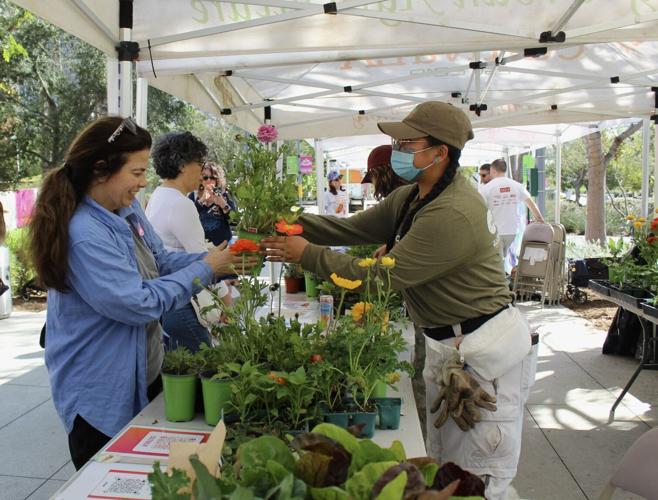


Attendees were able to take plants home. Photo courtesy of Brenda Verano
Community members from throughout Los Angeles arrived at Gloria Molina Grand Park in Downtown Los Angeles on Saturday morning to break ground for L.A.’s first Miyawaki Forest, a living ecosystem designed to restore biodiversity and capture carbon in places like Southern California.
The Miyawaki Forest is a recognized ecosystem in which forests are created using a method developed by Japanese botanist Akira Miyawaki, which involves planting species of native shrubs, trees, sub-trees and canopy layers in an extremely dense area.
In L.A., one of the largest urban cities in the nation, access to green spaces has never been more important. L.A. ranks 90 out of 100 in the Trust for Public Land's 2025 Park Score Index, declining from 49th place just five years ago, a phenomenon driven by major inequities in accessibility to recreational spaces and disproportionately higher in Latino communities and neighborhoods.
The Miyawaki Forest in the heart of L.A. aims not only to provide environmental benefits to the surrounding community but also to serve as a beacon of hope and a focal point for education on climate awareness and community engagement.
“We identified about 650 square feet within the park to try this new pilot, using a method called the Miyawaki ecosystem, which allows for the plants to grow at a fast pace and help create a sustainable environment for its surroundings for pollination and local wildlife,” Robert Gonzalez, director of Gloria Molina Grand Park, told CALÓ News. “What we want is to open up the doors of the park for all of our community members, including those who have been the caretakers of this land way before any of us showed up.”

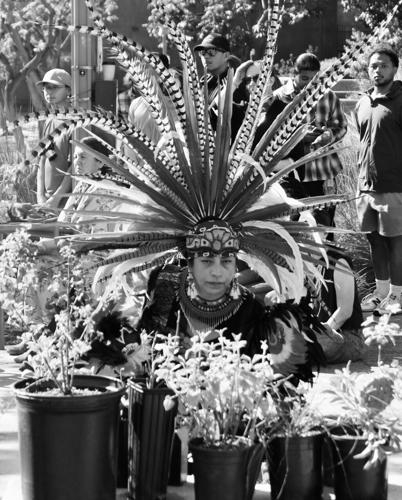
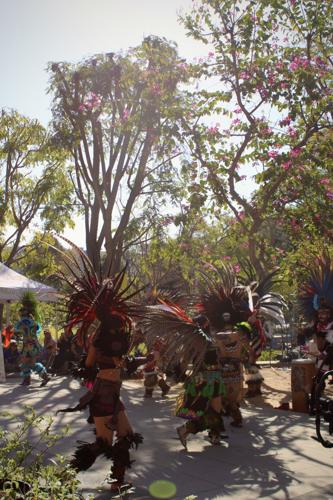
The Yankuitl Aztec dance group. Photo courtesy of Brenda Verano
The event began with an ancestral land acknowledgment by Marylee Jones of the Yakama Nation, followed by a ceremonial offering to the land from the Yankuititl Aztec dance group.
Maggie Calderon, captain of Yankuititl, spoke of how Indigenous people have used different plants for medicinal purposes, well-being and food, and the importance of offerings when it comes to landwork, a practice she said is rooted in reciprocity and respect.
“We're here to honor and bless the ancestral lands of the Tongva people,” she told CALÓ News. “For this very special event to establish an urban forest here right in the middle of the cement buildings all around us and what a beautiful time to do it right now, when there's so much negativity going on.”
Shortly after the Aztec dance offering led by Yankuititl, Ethan Bryson from Natural Urban Forests, an organization whose work focuses on the repurposing of barren urban landscapes for the benefit of the surrounding community, wildlife and the environment, hosted a hands-on planting demonstration for participants.
Volunteers were first instructed to choose one of the many medicinal, native, aromatic or other kinds of plants and shrubs provided by Cultiva LA.
After choosing their plant, volunteers would submerge the entire pot in a container of water, holding it down until bubbles stop rising for it to be well hydrated. They would then take out the plant from the pot carefully and without ripping the plant's roots, which would later be massaged before placing the plant into the ground.
In partners, with their entire family or alone, participants would then create a hole in the ground with the same depth as the root ball to prevent the plant from being too deep, which can cause suffocation.

Dancer from the Yankuitl Aztec dance group. Photo courtesy of Brenda Verano
After placing the plant in the hole, filling it with soil, covering the soil with mulch and ensuring it is leveled with the surrounding ground, volunteers screamed out the name of the plant that they had planted and the rest of the participants would repeat the name in honor of the plant's successful journey to the soil.
Taco, a volunteer from the San Fernando Valley, and Miguela, a volunteer from South Central L.A., met while in line at Saturday’s event and together planted a white sage and an elderberry bush. “I had been wanting to do something like this,” Miguel said. “I’m glad I came, [despite] the hot day. It’s a nice feeling to be around plants. This is what I think many of us need: a place to be able to grow our own food and plants.”
Taco, who worked in gardening and landscaping a few years ago, said this event reminded him of those days.
At the event, Taco, who knew how to use many of the hand tools, would rapidly dig the holes for the plants, and Miguel, who said he enjoyed the sense of dirt, preferred to use his hands. “It’s a nice way to build community and make friends,” Taco said when asked about the event, which he said he learned about through social media. “I was actually going to another event, but when I got out of the train, I saw this, and I stayed and met [Miguel].”
The new friends, Taco and Miguel, plan on visiting the plants they planted next month.
Monica Vega from the San Gabriel Valley was also among the people who volunteered to plant the Miyawaki Forest at Gloria Molina Grand Park. “As a lover of nature and the medicinal and health benefits of trees and plants, I'm here to support having more spaces like this,” she said.
Vega said she is also currently in the process of becoming a certified forest and nature therapy guide, which fosters the therapeutic benefits of spending time in nature through things like guided forest therapy walks, immersive experiences in nature and helping others connect with their surroundings.
“I’m on the lookout for natural spaces where people can have easy access to being in proximity to nature and trees, to befriend them and be inspired by them,” Vega said. “The unique thing about being a guide is also promoting giving back and that reciprocal relationship, and this is a perfect example of me being able to give back to Mother Nature.”
The future forest at Gloria Molina Grand Park is expected to grow 10 times faster and 30 times denser than traditional planting.
In addition to planting, families and participants were able to participate in a seedball-making workshop taught by Friends of the LA River.
Participants mixed clay, compost, and native seeds to create small, protective balls that they could take home and throw into their yards and gardens for more habitat restoration. Cultiva LA also had a table of native plants and herbs that were given to volunteers free of charge.

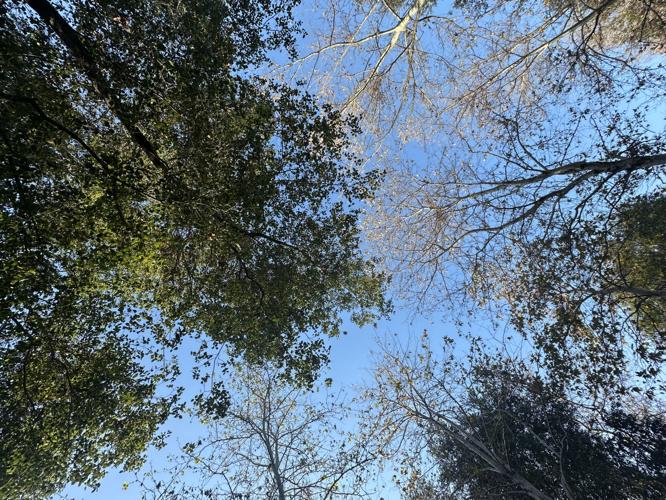
The future forest at Gloria Molina Grand Park is expected to grow 10 times faster and 30 times denser than traditional planting. Photo by Brenda Verano
Apart from plant accessibility and environmental justice-led workshops, Bet Tzedek, a prominent L.A.-based nonprofit law firm, was tabling and offering attendants free, comprehensive legal services. They also had free know-your-rights cards on their table for people to take.
Ruth, a representative of Bet Tzedek, told CALÓ News that they were happy to be included in an event like that on Saturday, as they believe human rights and environmental justice rights are interconnected.
“We're so happy to be included in an environmental justice-related event. We believe that services with legal advocacy are not only needed but essential for serving our community. We service all of L.A. County, whether it's housing, immigration, transgender rights or elder rights,” she said. “Red cards are one way of helping each other stay safe. Knowledge is power, so by staying informed and knowing what your legal rights are, it allows you to have a protective barrier.”
The forest is located on a 650-square-foot piece of land located inside the park lawn.
Gonzalez said that the Miyawaki Forest planting in Grand Park is a pilot project, but its success could determine the possibility of planting more of these forests throughout the park and even in other corners of the city.








(0) comments
Welcome to the discussion.
Log In
Keep it Clean. Please avoid obscene, vulgar, lewd, racist or sexually-oriented language.
PLEASE TURN OFF YOUR CAPS LOCK.
Don't Threaten. Threats of harming another person will not be tolerated.
Be Truthful. Don't knowingly lie about anyone or anything.
Be Nice. No racism, sexism or any sort of -ism that is degrading to another person.
Be Proactive. Use the 'Report' link on each comment to let us know of abusive posts.
Share with Us. We'd love to hear eyewitness accounts, the history behind an article.