

(Canva)
Just before Christmas 2020, Salvador Oliva and his family received a bill for over $10,000, the third such bill from a Los Angeles immigration consultant. Salvador, a naturalized U.S. citizen from El Salvador, had hired the consultant believing he was a lawyer who could help his wife with her immigration case. In reality, the consultant performed no legal work beyond filing a Freedom of Information Act request, a simple form anyone can submit online.
When the family did not pay, the consultant threatened to sue them and warned that ICE could deport them at any time. Salvador, who had been out of work for years due to a disability and was under financial strain from the pandemic, said, "I felt like death was upon me." He reported the fraud and cooperated fully with investigators. To date, no public enforcement action has been taken against the consultant who targeted his family.
Salvador's story is one of several we documented in a new white paper from Public Counsel, “Combating Notario Fraud in California: A Call to Action,” which I co-authored with my colleague, Kathleen Rivas, with support from the Loyola Immigrant Justice Clinic and UC Berkeley's Center for Consumer Law and Economic Justice.
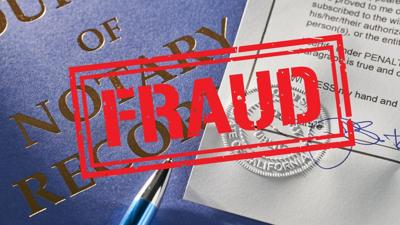
The white paper examines notario fraud, which occurs when non-attorneys pose as qualified immigration legal service providers, often charging exorbitant fees while filing meritless applications, performing substandard work, or taking money without performing any services at all. The fraud exploits a critical cultural difference: in many Latin American countries, notarios públicos are highly trained legal professionals with duties similar to those of lawyers.
In the United States, however, notaries may only witness signatures and cannot provide legal advice. Bad actors exploit this misunderstanding to misrepresent their qualifications and prey on immigrant communities. As an immigration attorney, I've watched this practice flourish in California for decades, even though the state already has one of the most comprehensive consumer protection laws in the country aimed at stopping it.
The need for action has never been more acute. Nearly 30 years ago, a study found that 71 percent of undocumented immigrants who received legal advice in Los Angeles County turned to a notario. Today, demand for immigration legal services is surging as enforcement actions escalate: between October and December 2025 alone, more than 130,000 new immigration court cases were filed, adding to a backlog of nearly 3.4 million pending cases, and only 26.7 percent of people ordered deported that December had a lawyer. Notarios exploit this gap, offering fast work permits and the power to undo old deportation orders.
Our research found the problem is not a lack of legal tools. California's Immigration Consultants Act, enacted in 1986, requires background checks, a $50,000 bond and contracts written in a client's native language, and restricts the use of misleading terms like "notario público" when used with intent to deceive clients. Violators face civil penalties of up to $100,000, criminal charges, and a private right of action allowing victims to sue for damages and attorneys' fees. California's ICA is among the most comprehensive in the nation.
In practice, it is barely enforced. There is no regulatory agency responsible for gathering complaints and enforcing the Act, and victims face a confusing patchwork of state and county offices to report to. Prosecutors generally need a large number of victims willing to come forward, who have been defrauded of large sums of money—a tall order when people fear that reporting fraud will expose their immigration status. By the time most victims realize they've been scammed, due to the lengthy delays in the immigration process, the case has often aged out of the Act's four-year statute of limitations.
When local agencies have the resources, results follow. The San Francisco City Attorney's office recently secured $600,000 in penalties from a notorious fraudster who tricked hundreds of immigrants. Los Angeles County established a Notario Fraud Unit in 2017, but by its own account, lacks the resources to prosecute the majority of offenders, leaving many notarios to continue preying on underserved communities with impunity.
That is why we are calling on the Legislature and county governments to allocate more funds and staff resources to investigate and bring enforcement actions against illegal immigration consultants. We also urge the Attorney General to convene an interagency roundtable with state and local law enforcement, the State Bar, and consumer protection agencies, and to ensure — consistent with California's Values Act — that victims who report fraud know their information will not be shared with federal immigration authorities.
Despite California's efforts to address this problem, we continue to see notario fraud flourish in immigrant communities with devastating effects. At a time when the federal government is waging a full-scale assault on immigrant communities, California can set itself apart by taking additional, significant steps to protect immigrant communities and uphold the rule of law. By dedicating more resources to this problem and using the laws already on the books to go after bad actors, California can send a clear message to our immigrant communities: we welcome and embrace our immigrant neighbors and we will not tolerate those who prey on them.







(0) comments
Welcome to the discussion.
Log In
Keep it Clean. Please avoid obscene, vulgar, lewd, racist or sexually-oriented language.
PLEASE TURN OFF YOUR CAPS LOCK.
Don't Threaten. Threats of harming another person will not be tolerated.
Be Truthful. Don't knowingly lie about anyone or anything.
Be Nice. No racism, sexism or any sort of -ism that is degrading to another person.
Be Proactive. Use the 'Report' link on each comment to let us know of abusive posts.
Share with Us. We'd love to hear eyewitness accounts, the history behind an article.