
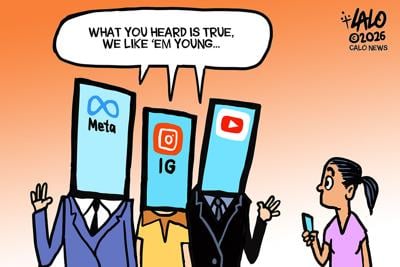


Meta CEO Mark Zuckerberg testified in LA Superior Court in a trial that claims Social Media companies purposefully target minors and are harmful to their mental health. Meta faces potential damages at the jury trial, thanks to litigation against social media companies in the U.S., where cases are beginning to go to trial amid a global backlash over the platforms’ effect on youth.
Before I was elected to the El Monte Union High School District Board of Trustees, I worked in our district’s information technology department. That experience showed me exactly where a school’s reach ends. A district can filter its Wi-Fi and manage its laptops, but a phone using cellular data never connects to the school network, so those safeguards don’t apply. The only people who control when that phone buzzes during a lesson — or at 2 a.m. — are the companies that make the apps. We all know how distracting and stressful constant notifications can be. They disrupt learning, not to mention sleep.
That's why the settlement Attorney General Rob Bonta helped secure with Meta matters so much to families in El Monte, South El Monte and Rosemead. Bonta co-led the case through trial and, as he put it, the states "had the receipts." Under the agreement, Instagram and Facebook notifications will be silenced during the school day, the apps will be unavailable to young users after midnight and daily use will be capped. For the first time, a social media company is being required to respect the hours students need for learning and sleep.
This is personal for me. I graduated from Mountain View High School in 2000, long before smartphones were in every student's pocket. I served as board president during the pandemic, when school moved almost entirely online and saw how difficult it was for students to regain their footing after returning to campus. Our teachers and counselors work every day to help students focus and support those who are struggling. They shouldn't have to compete with apps designed to distract students.
At the same time, I don’t want to keep students off these apps altogether. They use them to learn, create and stay connected. I want them to use these apps in the right place and at the right time, in ways that put their well-being first.
Right now, those terms apply to just two apps. Walk around any of our campuses at lunchtime and you'll see plenty of students on YouTube and TikTok — but neither company has agreed to extend these protections to California.
California is guaranteed $1.5 billion over ten years to prevent and address the mental health harms young Californians face from social media. Here's the catch: students in California could receive up to $600 million more — bringing the total to $2.1 billion — but only if YouTube and TikTok step up and adopt similar safety terms. Anything less would leave kids in our state worse off twice over: unprotected on the apps they use most and $600 million short on resources for their well-being. As the Legislature and the governor decide how to spend this money, I'll argue that a meaningful share belongs in our schools, where so many students first reach out for help.
Attorney General Bonta has made clear he's ready to sit down with any company willing to negotiate in good faith. YouTube and TikTok should take him up on that offer. When I worked in IT, a fix wasn't complete until it reached every machine on the network. Protecting our students works the same way: we can't call the job done until every app they use is covered.





(0) comments
Welcome to the discussion.
Log In
Keep it Clean. Please avoid obscene, vulgar, lewd, racist or sexually-oriented language.
PLEASE TURN OFF YOUR CAPS LOCK.
Don't Threaten. Threats of harming another person will not be tolerated.
Be Truthful. Don't knowingly lie about anyone or anything.
Be Nice. No racism, sexism or any sort of -ism that is degrading to another person.
Be Proactive. Use the 'Report' link on each comment to let us know of abusive posts.
Share with Us. We'd love to hear eyewitness accounts, the history behind an article.