

(Ipyani Lockert)
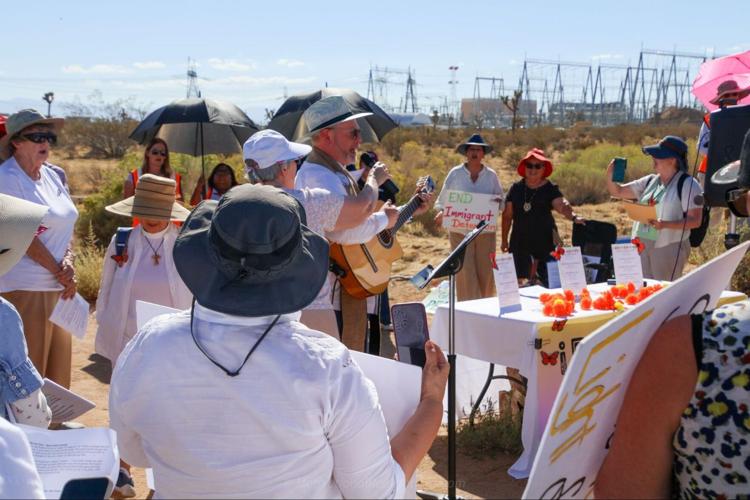
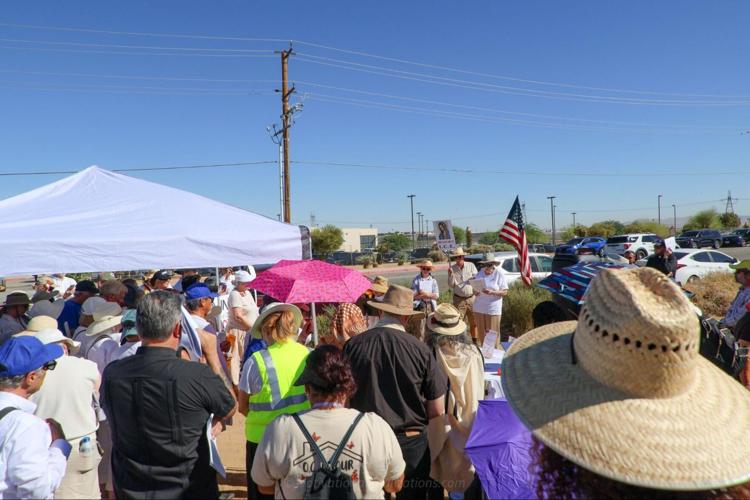
On October 7, I joined people of faith and conscience in front of the immigrant detention center in Adelanto, California, for an interfaith prayer service. We came together to pray, sing, listen, remember and bear witness to the lives of people whose freedom has been taken away and whose families and communities carry the pain of their absence.
Over one hundred of us took time out of our day to be fully present and create sacred space. In a world that often encourages us to keep moving, to focus on our own responsibilities and to look away from suffering that feels too distant or overwhelming, we chose to show up.
For me, this is what faith in action looks like
Prayer is sacred, and it is also a call to action. When we gather across multiple faith traditions, we create space for our shared humanity to become more visible than the divisions that separate us. Through our prayers, our songs and our willingness to listen to people impacted by detention, we remind one another that no human being should be forgotten, reduced to a number, locked away and treated as disposable.
Our presence said, "You are not forgotten. Your life matters. Your dignity matters. And your community stands with you.”
Beyond the walls: Remembering the human cost
Immigrant detention is often discussed through the language of immigration enforcement, policies and government budgets. But behind every detention bed is a person with a name, a story, a family and a life beyond those walls.
These are parents separated from their children, spouses separated from one another and families left to navigate fear, uncertainty, legal expenses and the emotional weight of not knowing what comes next. Many have spent years contributing to their communities, raising children, working, worshipping in churches and building relationships, only to be detained and separated from the lives they know.
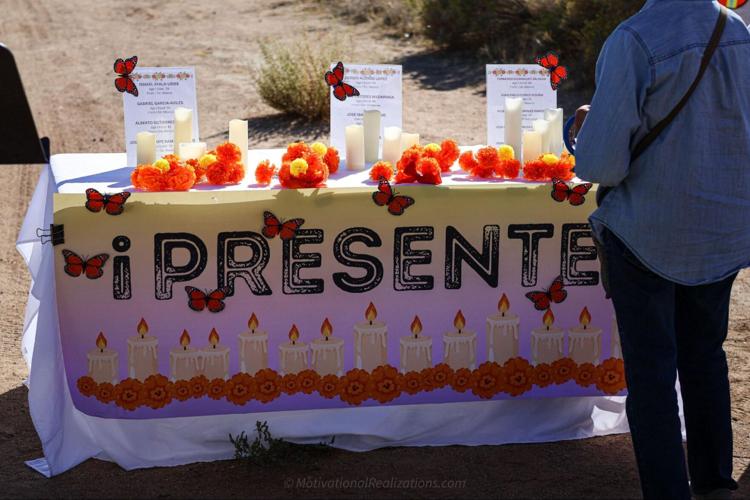
During our prayer service, we also honored the lives of people who have died while detained in this center. We called out their names and said “presente.” Their lives deserve to be remembered, and their deaths demand that we continue asking difficult questions about the systems responsible for their care.
Our prayers cannot bring back those who have died or immediately reunite families. But our collective presence can help ensure that their loved ones are not left alone in grief, and that we continue working toward a system that respects human dignity.
The cost of detention: What are we choosing to fund?
We must also ask what immigrant detention costs our communities, not only in human suffering, but in public resources.
Immigration detention requires substantial public funding. That money could instead support families, legal representation, mental health services, community-based case management, housing stability and other resources that help navigate immigration proceedings while remaining connected to their families and communities.

(Ipyani Lockert)
The One Big Beautiful Bill Act (enacted in July 2025) allocates $45 billion for immigration detention capacity (part of a larger $75 billion package for ICE through September 2029), according to The American Immigrant Council.
The scale of this spending matters. Private prison companies have benefited financially from immigration detention contracts, such as this facility in Adelanto. This raises an essential question: What happens when incarcerating human beings becomes a source of corporate revenue? Our public resources should serve our communities' well-being, not perpetuate systems that profit from people’s vulnerability.
The true cost of detention can not be measured in dollars alone. It includes lost wages, mounting legal bills, disrupted education, emotional trauma and the burden placed on families who must carry on without their loved ones.
We need to move beyond the assumption that detention is the only way to manage immigration proceedings. Community-based alternatives, access to legal support and compassionate case management deserve serious investment. Public policy should be measured not simply by how many people it detains and deports, but by whether it protects human dignity and strengthens our communities.
Faith calls us to show up
Public interfaith prayer services offer us an opportunity to put our beliefs into practice. We come from different traditions, but we share a conviction that every human life has worth and that our responsibility to one another does not end at the walls of a detention facility.

(Ipyani Lockert)
We accompany families whose loved ones are detained. We pray, but we also listen. We sing, but we also bear witness. We remember those who have died. We create sacred space in public, where compassion, solidarity and hope can challenge silence and indifference.
For those who could not join us in person because of immigration status, physical limitations or other barriers, the event's livestream offered opportunities to participate and extend the circle of solidarity. Our presence matters, and so does making the presence accessible to others.
I believe that transformation begins when we are willing to see one another fully. It continues when we turn our compassion into action, challenge policies that cause unnecessary harm and advocate for alternatives that keep families and communities connected.
As people of faith and conscience, we cannot claim to love our neighbors while ignoring their suffering. We can not speak of justice while accepting systems that diminish human dignity. And we can not separate our own freedom from the freedom of others.
I left Adelanto holding the people we prayed for in my heart, renewed in my commitment to immigrant justice. The work continues beyond one service, one prayer, or one gathering. It calls us to keep showing up, keep listening, keep organizing and keep imagining a future where our public resources nurture life rather than sustain unnecessary detention.
Because we are not free until everyone is free.









(0) comments
Welcome to the discussion.
Log In
Keep it Clean. Please avoid obscene, vulgar, lewd, racist or sexually-oriented language.
PLEASE TURN OFF YOUR CAPS LOCK.
Don't Threaten. Threats of harming another person will not be tolerated.
Be Truthful. Don't knowingly lie about anyone or anything.
Be Nice. No racism, sexism or any sort of -ism that is degrading to another person.
Be Proactive. Use the 'Report' link on each comment to let us know of abusive posts.
Share with Us. We'd love to hear eyewitness accounts, the history behind an article.