
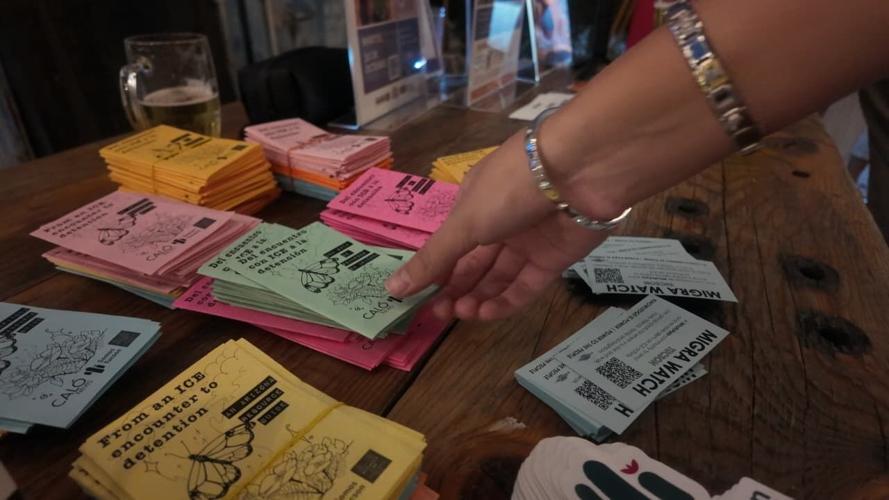
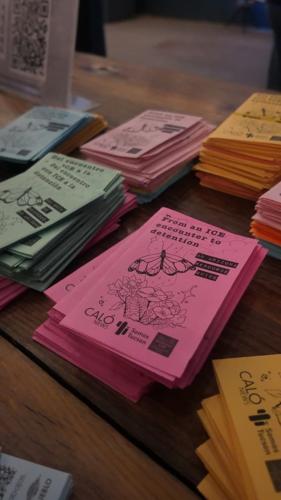
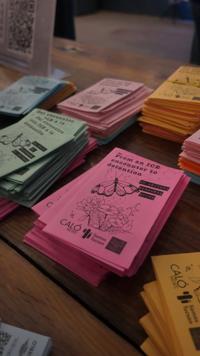

Copies of "Immigration Guide: From an ICE encounter to detention in Arizona" mini zines are handed out during an event in Tucson, Ariz. The resource guide was created by Arizona Latina journalist Stephanie Casanova in collaboration with Somos Tucson and CALÓ News, with funding from Altavoz Lab. (Credit: Mario Sosa)
A new collaborative community journalism project serving migrants with a loved one in detention — or who are at risk of being apprehended by immigration officials — is now available to Arizona’s immigrant community.
The "Immigration Guide: From an ICE encounter to detention in Arizona" explains, in nine sections, what families need to know about Arizona's immigration detention system and the community resources available to them.
Tucson-based bilingual journalist Stephanie Casanova and local news outlets CALÓ News Arizona and Somos Tucson produced the guide in English and Spanish. Altavoz Lab, a national organization that supports community journalists, made the project possible.
This bilingual project includes both an online guide and a portable printed version, each featuring specific information about the Eloy and Florence detention centers. It is also intended for people who are at risk of detention by Immigration and Customs Enforcement (ICE).

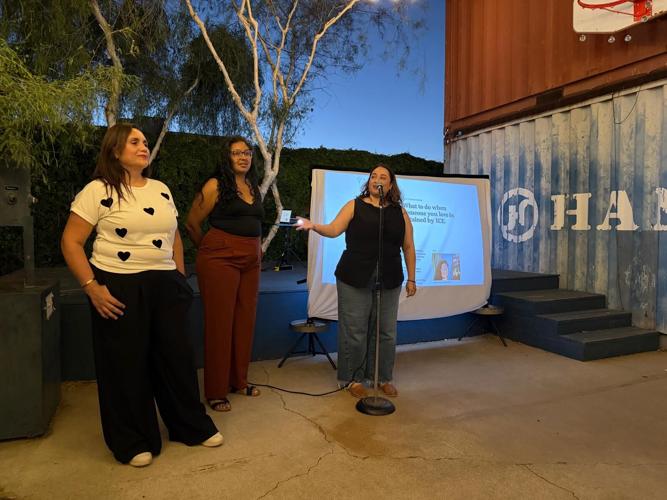
Arizona Latina journalists (from left) Liliana López Ruelas, founder and editor of Somos Tucson, Stephanie Casanova, environmental justice reporter at Arizona Luminaria, and Joanna Jacobo Rivera, news director at CALÓ News, present the creation of "Immigration Guide: From an ICE encounter to detention in Arizona" in Tucson, Ariz. (Credit: Alexandra Mora Medina)
The guides offer practical information on what to do if someone is detained, how to locate a detained person, how to make initial contact, how to send money for phone calls and commissary purchases, how to arrange visits and how to find legal representation and support resources.
The content draws on information from government agencies, immigrant rights organizations, and immigration attorneys, as well as verified testimonies from individuals who have gone through Arizona's immigration detention system during President Donald Trump’s second administration.
The online guide includes a glossary of terms and a directory of organizations, detention centers and government offices that can help locate a detained person. The project also includes initial reports written by Susan Barnett, Lorenzo Gomez, César Barrón, and Stephanie Casanova herself, recounting the experiences of three individuals detained in Eloy or Florence at different times and under varying circumstances, as well as the impact on their families and friends.
To be informed is to be prepared
“The idea for the guide started more than a year ago, when I realized just how confusing and frustrating the immigration detention system is, especially for our neighbors impacted by family separation and potential deportation who deal with the stress and emotional toll that comes with managing those crises,” wrote journalist Stephanie Casanova in a column detailing her motivation behind the project.

Copies of "Immigration Guide: From an ICE encounter to detention in Arizona" mini zines are handed out during an event in Tucson, Ariz. The resource guide was created by Arizona Latina journalist Stephanie Casanova in collaboration with Somos Tucson and CALÓ News, with funding from Altavoz Lab. (Credit: Mario Sosa)
In that column, published on the bilingual guide’s website, Stephanie described what she saw and experienced during her first visit to a detainee in Eloy, when she had to drive to the nearest clothing store to buy a blouse that met the facility's visitation dress code.
“When I returned wearing a new T-shirt, I noticed a lady walking toward the entry gate holding a bag with food. She also carried her purse and phone. It broke my heart to tell her they would not let her in with any of it,” Stephanie wrote.
The immigration guide is a product of community journalism.
The team's dedicated work, in partnership with community organizations, “showed us how powerful the community can be in creating a resource like this,” said Joanna Jacobo Rivera, editor of CALÓ News Arizona and co-editor of the project alongside Liliana López Ruelas of Somos Tucson.
The guide is available to the families and individuals it can serve, as well as to organizations working with migrant populations. If you need to contact us, please email detentionguideaz@gmail.com.






(0) comments
Welcome to the discussion.
Log In
Keep it Clean. Please avoid obscene, vulgar, lewd, racist or sexually-oriented language.
PLEASE TURN OFF YOUR CAPS LOCK.
Don't Threaten. Threats of harming another person will not be tolerated.
Be Truthful. Don't knowingly lie about anyone or anything.
Be Nice. No racism, sexism or any sort of -ism that is degrading to another person.
Be Proactive. Use the 'Report' link on each comment to let us know of abusive posts.
Share with Us. We'd love to hear eyewitness accounts, the history behind an article.