
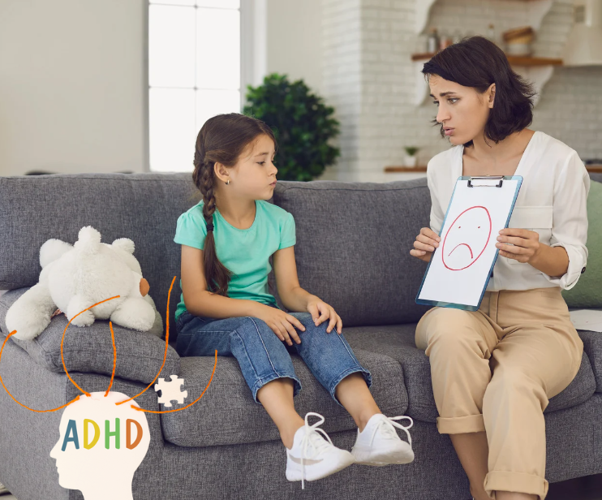


Attention-deficit/hyperactivity disorder (ADHD) is one of the most common mental disorders affecting children. Photo created in Canva by Amairani Hernandez.
There are disparities in getting Black and Latina/Latino/Latinx children with attention deficit hyperactivity disorder (ADHD) diagnosed, according to Diverse Health Hub.
In comparison to their white counterparts, Latina/Latino/Latinx children are 50% less likely to receive the diagnosis and Black children are 69% less likely to receive an ADHD diagnosis.
CALÓ News spoke with therapist Frances Chinchilla Orellana, clinical supervisor of Behavioral Health Services at AltaMed, about ADHD.
Orellana said that what contributes to the misdiagnosis of ADHD in the Latino community are the several health disparities and societal structures. “Latinos just don't have access to certain levels of care. They don't have access to medical services. Also, our community tends to not seek out treatment for things like this,” she said. “What ends up happening much later in life: this becomes evident and so we seek out treatment independently.”
According to data and statistics by the CDC, boys (15%) are more likely to be diagnosed with ADHD than girls (8%). While this may be true, in their latest study, published in the Journal of Clinical Psychiatry, scientists found a 43% increase in the rates of ADHD when they analyzed national data involving 190,000 children between 2000 and 2011. They also found that the greatest increase was among the Latino community, with 83%. Girls also showed a bigger rate of increase at 55% than boys (40%).
The same article by Diverse Health Hub states that for girls and women with ADHD, the symptoms often show up differently than they do in boys. “A majority of boys are hyperactive, boisterous, and have emotional outbursts; girls with ADHD more often display the inattentive part of the disorder and have trouble with things like staying focused in the classroom.”

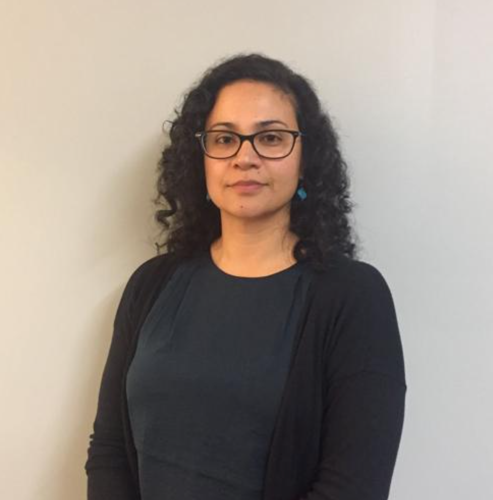
Frances Chinchilla Orellana, clinical supervisor of Behavioral Health Services at AltaMed. Photo courtesy of AltaMed.
Orellana believes that to break the stigma around ADHD, parents and schools need to be more educated on these mental health conditions. “I think schools really need to be able to identify those kids who are struggling and have those conversations with parents and reduce the stigma around the diagnosis and the interventions shouldn't feel punitive to the family,” she said. “I know I've worked with families in the past who are told that their child might have ADHD and they respond kind of defensively because, for one, you know, they don't understand what the diagnosis entails and they almost see it as a reflection of their own parenting. And so a lot of education just around the diagnosis needs to happen and the school is one of the best places to initiate that as well as in the primary care setting.”
ADHD symptoms
To increase awareness of ADHD, the symptoms need to be recognized. Some children or adults may display a few or several of the symptoms, which may include the following:
-Trouble concentrating for long periods
-Fidgeting or trouble staying seated in the classroom
-Issues with memory and reading comprehension
-Trouble following directions
-Emotional outbursts in the classroom
-Problems with impulse control
-Issues with regulating emotions
-Difficulty falling asleep at night
-Losing belongings frequently
-Daydreaming or “spacing out” in the classroom
In addition to individuals dealing with ADHD, nearly two-thirds of those with the disorder have a behavioral, emotional, or mental disorder along with the condition, such as dyslexia, Tourette syndrome, autism, depression, anxiety, or conduct disorder.
When to see the doctor
If you suspect that your child might have it, start with a visit to their pediatrician, and if you're an adult, consult your concerns with your primary doctor. Make sure to gather information about symptoms, troubles, recent life changes and any stressful events.
Once the primary doctor gives the patient the green light for further testing from a psychologist and psychiatrist, the specialist will need to put together information that they get from the patient, and that will help rule out other possible causes of the behavior.
The evaluation test will include a patient interview, a questionnaire assessment and a neuropsychological evaluation as part of the assessment.
Treatment options
According to Orellana, medication for ADHD can certainly help with focus issues and can also help with some of the impulsivity issues and is usually recommended for school-age children. She also suggested cognitive behavioral therapy, as it can help with developing skills such as time management and organization.
“For both children and adults, therapy is probably the first step you want to take if seeking treatment. You want to really gauge where the impairments are and the significance of the impairments and whether the interventions that are just therapy-based are helpful before you move into a medication component,” Orellana said. “I think that people can also have certain symptoms of ADHD but not necessarily meet the full criteria for a diagnosis. They should still seek out support because there are tools that they can learn that could just make their functioning overall better.”








(0) comments
Welcome to the discussion.
Log In
Keep it Clean. Please avoid obscene, vulgar, lewd, racist or sexually-oriented language.
PLEASE TURN OFF YOUR CAPS LOCK.
Don't Threaten. Threats of harming another person will not be tolerated.
Be Truthful. Don't knowingly lie about anyone or anything.
Be Nice. No racism, sexism or any sort of -ism that is degrading to another person.
Be Proactive. Use the 'Report' link on each comment to let us know of abusive posts.
Share with Us. We'd love to hear eyewitness accounts, the history behind an article.