


As immigrant detentions and deportations continue across the United States, fraudsters are seizing the moment. Scams targeting vulnerable families desperate to reunite with detained loved ones or to resolve outstanding immigration issues have proliferated.
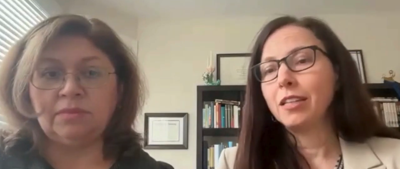
That was the consensus among experts from the Federal Trade Commission (FTC) during a recent American Community Media virtual news briefing.
It is “incredibly alarming,” said Monica Vaca, a 23-year veteran of the FTC who has helped secure hundreds of millions of dollars in consumer refunds.
Families experience intense emotional distress when a loved one is suddenly placed in Immigration and Customs Enforcement (ICE) detention, she said. Scammers exploit this vulnerability, often extracting thousands or even tens of thousands of dollars.
According to Vaca, these schemes are effective in part because they rely on payment methods that are difficult to reverse, allowing perpetrators to remain hidden. Some of those payment methods might include money orders, Zelle transfers, wire transfers, Cash App, cryptocurrencies, gift cards, and cash.
‘Nobody is safe’
Kati Daffan spent 15 years as a litigator with the FTC. She said scammers often show up while people are searching for lawyers online. They typically assure victims that they will be successful in getting the family member out of detention or in helping with legal trouble.
“It doesn’t take that much money to advertise on social media. It doesn’t take much money to place a phone call or send a text or an email,” said Daffan. “Nobody is safe from being contacted by a scammer.”
Daffan indicated that scammers are using increasingly sophisticated tactics to make their schemes appear legitimate, often creating fake documents and staging elaborate scenarios to convince families they are dealing with real attorneys.
Perpetrators have presented bar licenses that appear authentic, sometimes using the name of a real California attorney, noted Daffan. In some cases, scammers will go so far as to fake immigration hearings over Zoom with individuals posing as judges and issuing fraudulent bond rulings or fabricated release orders.
“We have even heard of fake receipts,” said Daffan. “ICE received your bond money and here’s a receipt […] all of these documents look like they could actually be coming from the government, and of course, when someone is so desperate to help their family member, it’s going to be very easy to believe that this is all legitimate.”
Scam red flags
Scams often unfold through a series of smaller, seemingly reasonable payment requests rather than a single large demand. Victims may first be asked to pay a few hundred dollars for a retainer fee, followed by additional charges for services such as a bond application, the bond itself, or even unexpected costs like taxes. Over time, these incremental payments can amount to thousands of dollars.
One red flag to watch out for is when initial contact comes through social media or responses to online advertisements, which Daffan said are increasingly being used to target communities seeking immigration-related assistance.
Strong assurances of a positive outcome are another warning sign, she said. “In this moment, no one can guarantee success.”
Protect your assets
Vaca stressed the importance of protecting family assets when a loved one is detained, particularly if that person is the household’s primary earner. In such cases, she advised, it is critical that other family members have access to bank accounts. She noted reports of relatives being locked out of funds because they were not listed on the accounts.
“Consider adding another adult member of the family to your bank accounts so that the funds are available to the family if the account holder is detained,” she said.
Vehicles are another key concern when a family member is detained. Immigrants are sometimes taken into custody during traffic stops, leaving their cars to be towed and held in impound lots, where they accrue daily fees, adding additional financial strain on families.
Vaca said that in some cases, impound facilities require proof that the person retrieving the car is listed on the vehicle’s insurance or title, and may refuse release if they are not. To avoid these complications, she advised adding a trusted family member to the auto insurance policy or the vehicle title.
A limited power of attorney can serve as a safeguard in the event of detention, allowing someone to designate another person to access specific assets or make decisions on their behalf under specific conditions, such as detention or deportation.
This can include authorizing a trusted family member to manage bank accounts or sell a vehicle if needed. She explained that legal services offices often provide guidance on these forms, but requirements vary by state.
“Start with a list of reputable sources and assemble that list today,” emphasized Vaca.
Have a plan
Even if services are not immediately needed, she said, pre-vetted resources can help families avoid turning to unreliable or fraudulent actors.
Established organizations that maintain directories and referral networks include the American Immigration Lawyers Association, the Catholic Legal Immigration Network, and Immigrant Advocates Network, which provide access to vetted immigration legal services and local support organizations.
“We’ve heard this again and again of people feeling absolute desperation because their husband or their wife or their son or somebody was picked up and detained,” Vaca said. “In that moment, they are looking on Facebook or on some social media site for immigration services, and that is a source of fraud.”
Daffan also warned against working with individuals who present themselves as “notarios” (notary public), stating that the term can be misleading in the United States.
While in parts of Latin America, “notario” may refer to a legal professional, she explained that in the U.S., a notary public credential is very easy to obtain and does not qualify someone to provide immigration legal services.
“Talk with your family about what to do if a member of your family is detained. If you have a plan, then when you lose communication with your loved one, even if it’s just a temporary loss of communication, you can rely back on that plan,” Vaca said. “All of this is designed to try to help you avoid […] making big decisions in that moment of stress.”
Roxsy Lin is a California Local News Fellow with the UC Berkeley Graduate School of Journalism.








(0) comments
Welcome to the discussion.
Log In
Keep it Clean. Please avoid obscene, vulgar, lewd, racist or sexually-oriented language.
PLEASE TURN OFF YOUR CAPS LOCK.
Don't Threaten. Threats of harming another person will not be tolerated.
Be Truthful. Don't knowingly lie about anyone or anything.
Be Nice. No racism, sexism or any sort of -ism that is degrading to another person.
Be Proactive. Use the 'Report' link on each comment to let us know of abusive posts.
Share with Us. We'd love to hear eyewitness accounts, the history behind an article.