


(Canva)
The meeting is almost over. Teachers and administrators shuffle papers, glance at the clock. Then Frida stands up. She’s a senior at Anaheim High—with college applications behind her and a whole life pulling her forward. But for weeks she’s been doing something else. Talking to classmates in hallways and between classes. Proposing—and helping lead—student office hours with her principal, so her peers could get the facts about a proposed change to the school schedule and actually debate it, face to face, with the person making the recommendation.
“The students were angry,” she says, “because it seemed like the decision was being made for them instead of with them.”
Frida wanted to change that—and to make sure her peers understood what was at stake: a restructured school day that could open up more room for AP classes, arts, athletics and career pathways. More time. More choices. More room to figure out who they want to become. Now she’s in a room full of adults, alongside her peers, presenting what they found together. She knows she'll graduate before most of it becomes real. She steps forward anyway.
That kind of investment—a senior pouring her efforts into a school she’ll leave before seeing it transformed—doesn’t happen by accident. It happens when students believe their voices matter, when schools are built on genuine partnership rather than top-down mandates. It is exactly what California's Community Schools Partnership Program was designed to cultivate. As legislators prepare for an April 14 hearing on the program's future, the question before them is whether they'll honor that investment with permanent funding—or let it quietly slip away.
The stakes are especially high in Southern California. Across the region, districts grapple with chronic absenteeism, how to best serve diverse communities, fiscal challenges, staffing shortages or looming teacher strikes like those planned in the Los Angeles School District (LAUSD), and deep anxiety about the twin demons of immigration enforcement and economic instability. These problems share a common foundation: trust. Trust between students and teachers, families and school leaders, administrators and community partners. Trust that takes time to build—but once built, changes everything. It creates the safety and belonging that students and families need to show up, especially in dangerous and uncertain times.
Community schools create the conditions for that trust by shifting mindsets to embrace partnership with community and position students, families, educators and community as members of the same team. In Anaheim, the Orange County Congregation Community Organization (OCCCO) has helped make that shift real. When the school community came together to rethink how their school day was structured, it wasn't administrators handing down a decision—it was students, families and educators collaborating on a redesign that would give students time to pursue community-based learning projects rooted in their own curiosity and interests. The community didn't just weigh in. They co-designed.
The results for students across the state are striking. At Eureka City Schools in rural northern California—where the transformation to a community schools approach in one high school began with more than 150 individual community conversations—college and career readiness jumped from 45% for the class of 2023 to 76% for the class of 2025. Reclassification of English learners as English proficient climbed from 44% to 57%. Chronic absenteeism was nearly cut in half—from 24% to 12% at one elementary school. The through line in every case is the same: as families and students become education co-leaders, students thrive.
When the California Partnership for Future of Learning—a statewide alliance of organizations—listened to more than 1800 students and families last year, they heard about the widespread fear—of racial profiling, family separation, economic instability and a fraying safety net.
But they also heard that community schools are now places people turn to when crisis hits: the place an administrator calls to engage immigrant families. A staff member checking on a student who is afraid her parents will be taken away. A coordinator of safe routes to school when families are afraid to walk outside. California built this infrastructure during one crisis—and it is holding communities together through another one. Because a student who doesn't feel safe can't learn. A family living in fear can't fully partner with a school. Community schools address both—and that is precisely why the learning gains are real.
Letting it wither now would be a serious mistake. One-time funding forces districts to wind down the coordinators, partnerships and capacity-building work that drive this success, just as that work is taking root. For schools in rural areas and under-resourced communities, there is no fallback.
For California’s incoming governor, this is also a question of legacy. The Local Control Funding Formula directed resources towards students who need them most. Community schools gave those resources a community-driven engine—a framework for turning dollars into belonging and belonging into outcomes. Committing to fund it year after year is how a new administration cements that progress and signals, clearly, California’s allegiance to public education.
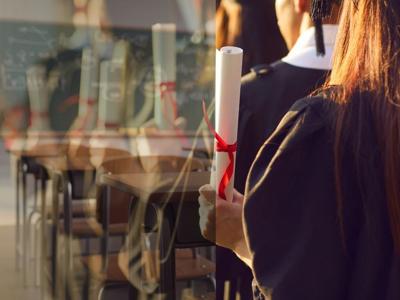
Frida will walk across a graduation stage this spring before she sees the full fruits of what she helped set in motion. She’s made her peace with that. The question for California's lawmakers is whether they'll match her commitment—to the students she'll never meet, but built for them anyway.







(0) comments
Welcome to the discussion.
Log In
Keep it Clean. Please avoid obscene, vulgar, lewd, racist or sexually-oriented language.
PLEASE TURN OFF YOUR CAPS LOCK.
Don't Threaten. Threats of harming another person will not be tolerated.
Be Truthful. Don't knowingly lie about anyone or anything.
Be Nice. No racism, sexism or any sort of -ism that is degrading to another person.
Be Proactive. Use the 'Report' link on each comment to let us know of abusive posts.
Share with Us. We'd love to hear eyewitness accounts, the history behind an article.