
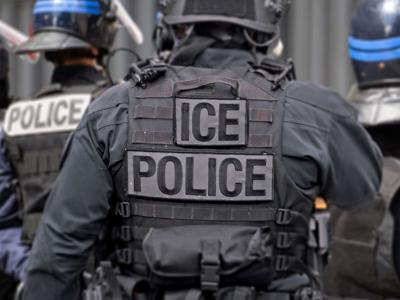

(Douglas Rissing/Getty Images)
For many Latino and mixed-status families across the Southwest, simple acts like taking children to school, driving to work and picking up groceries have shifted from a normal morning routine into a calculated risk.
A sweeping new national report from the American Civil Liberties Union (ACLU), titled Agents of Chaos and Cruelty, documents how aggressive immigration enforcement tactics have turned everyday community spaces into potential detention zones.
While high-profile federal deployments in major metropolitan areas like Los Angeles and Chicago drew widespread national attention, communities in Arizona and New Mexico are navigating an ongoing, daily climate of fear tied to local law enforcement involvement with Immigration and Customs Enforcement (ICE) and Customs and Border Protection (CBP).
According to the ACLU report, which examined more than 1,200 immigration enforcement incidents nationwide, racial profiling served as a core operating practice rather than an isolated occurrence. Out of 437 total documented incidents of likely racial profiling across eight target states, Arizona accounted for 26 cases, while New Mexico logged 10.

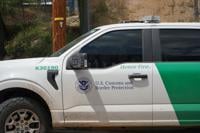
A new report by the Ohio Immigrant Alliance shows that Arizona leads — second only to Texas — in the number of Border Patrol agents accused and convicted in sexual abuse cases.
A daily danger in the Southwest
Noreen Shah, Director of Policy and Government Affairs for Immigration at the ACLU, emphasized that while the intensity and visibility of immigration enforcement vary by state, the fear of encountering immigration enforcement operations is a reality across much of the country.
"In Arizona and Texas, there's a lot of concern about local police involvement with ICE and a lot of concerns about racial profiling — police stopping people and handing them to ICE," Shah told CALÓ News.
She explained that unlike short-term, high-intensity federal deployments, many communities in Arizona are experiencing ICE operations as an ongoing hazard tied to daily life. "People who are engaged in acts of daily life, like taking their kids to school or driving to work... carry a risk of suddenly being torn away from their families and deported,” she said.
This creeping daily anxiety means some household members simply stop leaving home. The presence of federal agents—and local force multipliers, such as state troopers, marshals and local police departments collaborating with federal agencies—creates a constant undercurrent of fear. Community members worry that calling for help during an emergency, such as a noise complaint or a domestic dispute, could result in ICE arriving at their door.
In Arizona, with a new law having taken effect this summer that would make unauthorized immigration into a state-level offense, the collaboration between local law enforcement and ICE agents could soon mount.

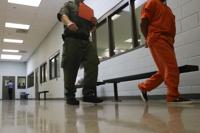
ICE continued to detain at least 120 migrants in Arizona after judges barred deportation to their home countries, according to an AZCIR analysis of more than 1,200 habeas corpus petitions.
Prop. 314, also known as the “Secure the Border Act” approved by voters in November 2024, includes three main sections that target immigration status verification for public benefits, the sale of foreign-made fentanyl and, most importantly, unauthorized immigration, converting the federal crime into a state offense and therefore enforceable by local law enforcement and courts.
In Tucson, grassroots organizations are seeing the human cost firsthand. Maru, a long-time promoter and rapid response coordinator with Coalición de Derechos Humanos — and whose full name is being withheld for safety reasons — receives calls every single day from families terrified of what is happening on the streets.
ICE has a tendency to show up “in the mornings when workers are going to work," according to Maru, describing patrols targeting day laborers, landscapers and construction workers along main roads like Nogales Highway, Valencia Road, Sixth Avenue and Park Avenue. "They're not taking criminals or anything. They're taking workers. That's [who] they're doing."
The report comes to light following Attorney General Kris Mayes’ commitment to hold ICE agents accountable for misconduct, launching a complaint form on her website for Arizonans to report any incidents.
Her office did not respond to CALÓ News’ requests for comment regarding the report or if she planned to look into the documented misconduct cases in Arizona in the report.
Documented abuses and tactics on the ground
According to the report, agents frequently employed deceptive ruses to bypass legal protections, such as disguising themselves as utility workers offering free estimates or even shutting off a family's water line to force residents outside. Enforcement also regularly breached what used to be protected community spaces, with 86 incidents occurring at or near schools, playgrounds, bus stops, medical facilities and social service centers.
In Arizona specifically, documented cases include Border Patrol detaining individuals outside local hospitals and ICE officers conducting detentions outside school fences during morning drop-offs.

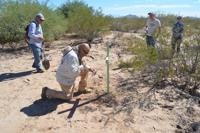
A Humane Borders report found that migrants are still dying in the desert at consistent levels as in previous years, despite the Trump administration “closing the border.” Human rights activists argue the deaths were preventable.
These tactics carry an acute trauma for children. Across the report's findings, 157 incidents directly involved children being present, targeted or detained. For mixed-status families, young children face the psychological toll of witnessing a parent being handcuffed and taken away or returning home from school to find their house empty.
Accelerated deportations also carry life-or-death consequences when people attempt to return to their families. According toa recent CALÓ News report on migrant deaths in the Arizona borderlands, U.S. Customs and Border Protection documented over 20,000 land border encounters in Arizona in 2026 alone, not counting those who died on their journey to the U.S. Most die from dehydration and exposure, according to a Humane Borders report, but others succumb to hypothermia, drowning, blunt force trauma and unknown causes. Among the deceased found in July, five had passed less than a day before being recovered — deaths that community advocates argue were entirely preventable.
Maru shared the story of a Tucson man who ran his own landscaping business, employed several workers and held a valid U.S. visa. Earlier this year, he was pulled over by authorities on Park Avenue. Despite presenting his valid U.S. visa paperwork, agents detained him and deported him to Nogales, Mexico, that very same day. In a single afternoon, he lost his home, his truck, his tools, his business and his livelihood.
The next day, he called Maru from Nogales, saying that he was considering coming back. Maru urged him not to attempt a re-entry at the moment, warning that in addition to the dangers of the Sonoran Desert, under the current administration's expansion of surveillance — including Flock Safety cameras — crossing into the U.S. in an unauthorized manner would criminalize him, risking years of incarceration. She advised him to remain in Nogales for the time being, use his skills to build a life in Mexico and gather his paperwork so he can safely present his case in court when conditions change.
Know your rights and community preparedness
In response to these aggressive encounters, local communities have built extensive mutual aid networks.
In Phoenix, ACLU Arizona, Borderlands Resource Initiative, Puente and more grassroots groups across the Valley continue to host events that assist their community in taking proactive, preventative measures.
Earlier this week, Puente held its first Brake Light Clinic, providing free vehicle light checks and bulb installations to avoid potential police interactions. Other organizations have provided packets containing important power of attorney paperwork that they encourage people to complete, along with access to free notaries to process them. At its informative town hall, ACLU Arizona also stressed the importance of memorizing at least one phone number of a trusted contact in the case of sudden detainment.
In Tucson, Derechos Humanos coordinates over 200 trained community observers, hosts legal clinics known as Clínicas del Barrio, connects affected children with psychological support and gathers essential food supplies through initiatives like La Bodega. Neighbors have also organized practical defenses on the ground, such as handing out whistles at local laundromats and supermarkets so workers and shoppers can alert one another and clear enforcement patrols from commercial parking lots.
As legal advocacy groups continue pushing back against police-ICE collaboration, civil rights experts stress the urgency of family legal preparedness. The ACLU emphasizes that constitutional rights apply to everyone, regardless of immigration status, and urges community members to review official know your rights guidance before interacting with law enforcement.
Advocates strongly encourage individuals experiencing shifts in their legal status — such as pending visa renewals or expiring Temporary Protected Status — to consult immigration attorneys and carry documentation at all times. Families are also advised to establish concrete emergency plans, ensuring designated guardians have custody arrangements in place for U.S. citizen children and that copies of vital documents are safely accessible if a family member is suddenly detained.
"No one is safe from these masked federal law enforcement and local police who are on an arrest spree," Shah warned, adding that when agencies operate without accountability, the resulting environment compromises civil liberties and safety for the entire community.
Phoenix-based reporter Analisa Valdez contributed to this reporting.
Isabela Gamez is a Tucson-based journalist and graduate of the University of Arizona’s School of Journalism. She served as the UA School of Journalism’s Don Bolles Fellow and previously interned at Voice of America, The Arizona Mirror and Arizona Public Media. Her work has appeared in Tucson Spotlight, Tucson Foodie and other publications. She reports on social justice issues and feature stories across the Southwest.






(0) comments
Welcome to the discussion.
Log In
Keep it Clean. Please avoid obscene, vulgar, lewd, racist or sexually-oriented language.
PLEASE TURN OFF YOUR CAPS LOCK.
Don't Threaten. Threats of harming another person will not be tolerated.
Be Truthful. Don't knowingly lie about anyone or anything.
Be Nice. No racism, sexism or any sort of -ism that is degrading to another person.
Be Proactive. Use the 'Report' link on each comment to let us know of abusive posts.
Share with Us. We'd love to hear eyewitness accounts, the history behind an article.