
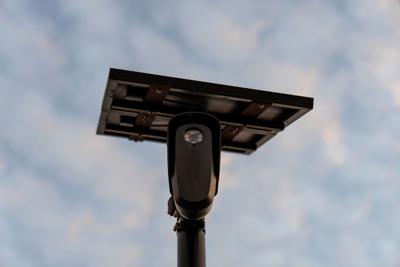


FILE - A Flock Safety license plate reader is seen along a public road, Thursday, Oct. 16, 2025, in Houston. (AP Photo/David Goldman, File)
Following multiple reports of local law enforcement misuse of AI-powered surveillance technology, Arizona Attorney General Kris Mayes has launched a review of automated license plate reader (ALPR) systems being used by multiple cities in the state.
On Thursday, Mayes released a statement saying her office will “conduct a review of the use of Flock cameras and other similar surveillance and automated license plate reader systems across Arizona.”
Local outcry against the surveillance systems being used across the Valley and the state has been increasing, leading many residents to stage protests during city council meetings and outside technology company headquarters, raising valid concerns about their privacy rights and the effectiveness of such systems and calling on local leaders to end contracts with the manufacturers and operators of cameras that continue to pop up along metro Phoenix city streets.
The fight against AI-powered technology is tightly tied to the fight against data center projects being proposed by tech companies across the state. The demand to scale poorly regulated centers and surveillance systems — which operate at a dire cost to local natural resources — is drawing scrutiny from residents and local governments alike.
“Arizonans are rightfully concerned about the documented examples of the misuse of this technology as well as how it affects their privacy rights. I share those concerns. We need a statewide approach to this issue.”
The review comes as several cities are moving away from using the technology meant to assist police departments in their daily operations and investigations.
Chandler City Council voted in early August to discontinue its use of 40 fixed-camera ALPRs powered by Flock Safety after a city audit found that a Chandler police officer had misused the surveillance system to locate a family member. The officer later resigned after admitting to the misuse.
This officer’s case is one of hundreds being documented by the Institute for Justice, a nonprofit, public interest law firm. A map recently launched by the nonprofit shows nationwide incidents in which local law enforcement misused and abused ALPR camera data to track and invade the privacy of individuals not accused of or committing any crimes. At least three other incidents have been reported in the state.
The city of Tempe announced this week that it was turning off the Flock ALPR system it was using and would end its contract with the company, saying that “recent cases involving the misuse of automated license plate reader systems in Arizona and nationwide have raised concerns about the risks that come with the technology.” The change came days after the city said its police department would stop sharing data captured by Flock-installed cameras.
Other cities like Cave Creek and Surprise have taken similar steps.
Mayes’ office will prepare a report which will be submitted to Gov. Katie Hobbs. The report will include a review impact and whether the technology operated by Flock Safety, Axon, Genetec and similar tech companies working with local law enforcement infringes on Fourth Amendment rights, which protects citizens from unreasonable government searches and seizures.










(0) comments
Welcome to the discussion.
Log In
Keep it Clean. Please avoid obscene, vulgar, lewd, racist or sexually-oriented language.
PLEASE TURN OFF YOUR CAPS LOCK.
Don't Threaten. Threats of harming another person will not be tolerated.
Be Truthful. Don't knowingly lie about anyone or anything.
Be Nice. No racism, sexism or any sort of -ism that is degrading to another person.
Be Proactive. Use the 'Report' link on each comment to let us know of abusive posts.
Share with Us. We'd love to hear eyewitness accounts, the history behind an article.