

(Hilda Cruz)
As a first-generation immigrant woman, I took my voting rights seriously when I became a U.S. citizen. I believe deeply in the power of democracy and in its promise to advance the common good. Voting is one of the most important ways we participate in that promise.
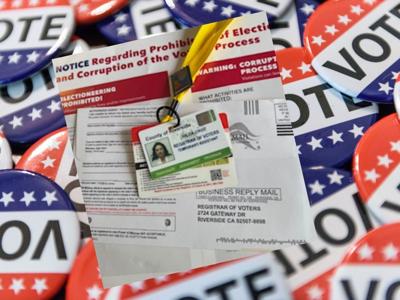
My desire to take part in the democratic process led me to work with my county's Registrar of Voters. Through that experience, I gained a firsthand understanding of how elections are conducted and the many safeguards in place to protect the integrity of every vote. I am confident that the dedicated individuals who staff vote-by-mail, drop-off sites and polling locations help uphold and strengthen our democratic values.
Vote-by-mail is one of the most convenient and efficient ways to participate in an election. Ballots and voter information guides are mailed several weeks before Election Day, giving voters ample time to research candidates and ballot measures. Completing a ballot typically takes only a few minutes: mark your choices, place the ballot in the provided envelope, seal it and sign it. From there, you can either return it by mail or drop it off at one of the secure vote-by-mail locations throughout the county.
While serving at a vote-by-mail drop-off site, I had the opportunity to meet voters and listen to their hopes, concerns and questions about the election process. As someone who has worked within the system, I would like to address some of the most common concerns I have heard.
"Why aren't you asking for my ID?"
Voter identification begins when a person registers to vote. During registration, voters provide identifying information, including their Social Security number and California identification. They also affirm, under penalty of perjury, that they are eligible U.S. citizens. When voting by mail, voters must sign the return envelope, and that signature is verified against the signature on file with the Registrar of Voters before the ballot can be counted.
"Are ballots returned through the U.S. Postal Service really counted?"
Yes, every valid ballot received is counted. Vote-by-mail ballots require additional time for processing, signature verification and their official count. This is why election-night results are considered unofficial. Days after the election, officials continue to count and verify ballots received by mail and final certification occurs only after a thorough review of all eligible ballots.
"Do vote-by-mail ballots remain at drop-off sites until Election Day?"
No. Having worked at one of these locations, I can attest that ballot security is taken very seriously. Our responsibility was to ensure that ballots were never left unattended. At the end of each day, teams transported the ballots they had been received at the drop-off site directly to the Registrar of Voters' office, where election staff received, documented and verified them.
The commitment to election integrity begins with the people entrusted to serve. Individuals hired for these temporary positions undergo background checks and take an oath to support and defend both the United States Constitution and the Constitution of California. This oath reflects a commitment to serve with honesty, integrity and respect for the democratic process.
At a time when many people feel uncertain about our institutions, my experience gave me hope. I witnessed ordinary people, neighbors, retirees, students and community members working diligently to ensure that every eligible voter could participate and that every ballot was handled with care. Democracy is not sustained by systems alone; it is strengthened by the people who carry out their responsibilities with integrity and a shared commitment to the public good.
That experience reaffirmed my faith in the electoral process. It reminded me that democracy works best when we participate, stay informed and trust in the safeguards designed to protect every voice and every vote.








(0) comments
Welcome to the discussion.
Log In
Keep it Clean. Please avoid obscene, vulgar, lewd, racist or sexually-oriented language.
PLEASE TURN OFF YOUR CAPS LOCK.
Don't Threaten. Threats of harming another person will not be tolerated.
Be Truthful. Don't knowingly lie about anyone or anything.
Be Nice. No racism, sexism or any sort of -ism that is degrading to another person.
Be Proactive. Use the 'Report' link on each comment to let us know of abusive posts.
Share with Us. We'd love to hear eyewitness accounts, the history behind an article.