
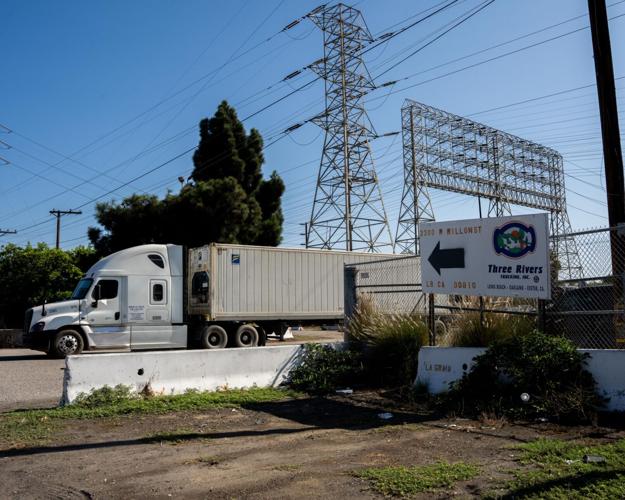


Ag-Fume Services, located at Three Rivers Trucking in Long Beach, is one of 13 methyl bromide fumigation facilities operating in Los Angeles County. Photo by Jeremy Lindenfeld for Capital & Main.
Capital & Main produced this article. It is published here with permission.
Data reporting by Ben Poston.
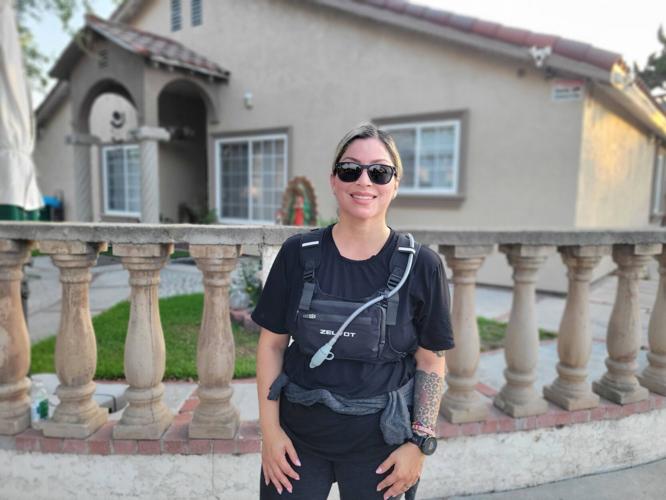
On most evenings, Maricela Morales runs with her 18-year-old son in West Long Beach, a neighborhood that is less than a half-mile from two fumigation facilities that regularly spew a toxic pesticide called methyl bromide into the air.
Air regulators have known for years about the potential hazards posed by the facilities that fumigate produce imported to or exported from the U.S. through nearby ports. But to Morales, 41, who had just finished a run in early August, their existence was news.
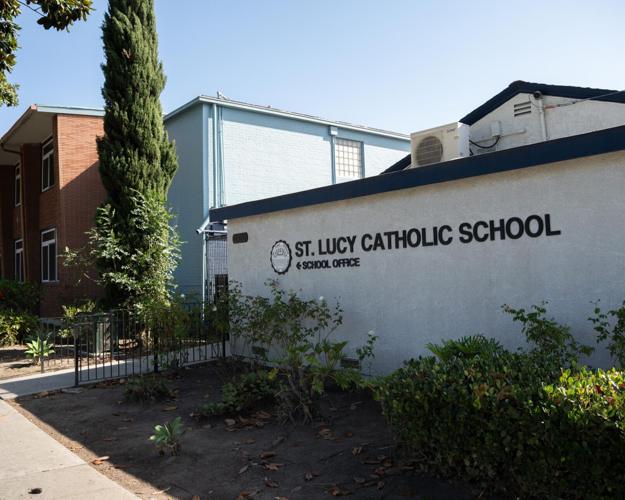
“I knew air quality was bad, but I thought it was because of the refineries,” she said, adding that she was concerned about how the emissions might impact her 5-year-old son, who attends St. Lucy Catholic School across the street from their home.
Across Los Angeles County, 13 fumigation facilities have for years been spraying imported fruits and vegetables with methyl bromide, a colorless, odorless gas. Chronic exposure can cause long-term health problems, such as nasal cavity lesions and harm to the nervous system, and poses threats to the eyes, kidneys and liver, with children especially vulnerable to the risks.
Many of the facilities are located in or near densely populated neighborhoods that are already burdened with pollution from oil refineries and truck traffic from the ports of Los Angeles and Long Beach.
In response to community pressure, local air regulators last year began a months-long assessment of the health risks of methyl bromide emissions that will determine whether any facilities will be required to notify nearby residents of their pollution or take steps to reduce it. The South Coast Air Quality Management District has also been developing new emissions rules for fumigation facilities that community groups are hoping will require more robust monitoring, public notification requirements and enforcement, and reductions in pollution.

Maricela Morales poses for a portrait after her evening run in West Long Beach. Photo by Jessica Goodheart for Capital & Main.
While Morales and many other residents remain in the dark about the potential threat, air quality readings analyzed by Capital & Main show that there have been 20 spikes in methyl bromide pollution in West Long Beach so far this year as of early September, in some instances exceeding 200 times the level regulators deem safe for chronic exposure.
* * *
Capital & Main’s analysis examined publicly available air quality data from late May 2025 through early September 2026 from a South Coast district monitoring station near West Willow Street and the overpass for the Terminal Island Freeway, a location regulators chose because it sits downwind of two fumigation facilities. Capital & Main also reviewed pollution readings contained in reports by local and state air quality officials going back to 2023.
While the average concentrations of methyl bromide at that location have fallen since 2023, hourly concentrations have spiked above 100 parts per billion on 20 occasions this year, the data shows, raising questions about nearby communities’ episodic exposure to the harmful chemical.
According to the California Air Resources Board, chronic exposure above 1 ppb can lead to long-term health complications, and short-term exposure above 1,000 ppb can lead to headaches, dizziness, nausea and trouble breathing.
The highest concentration of the pollutant since May 2025 — 353 ppb — was detected at 11 p.m. on March 22. At 10 p.m. on April 19, the monitoring station recorded a methyl bromide level of 307 ppb.
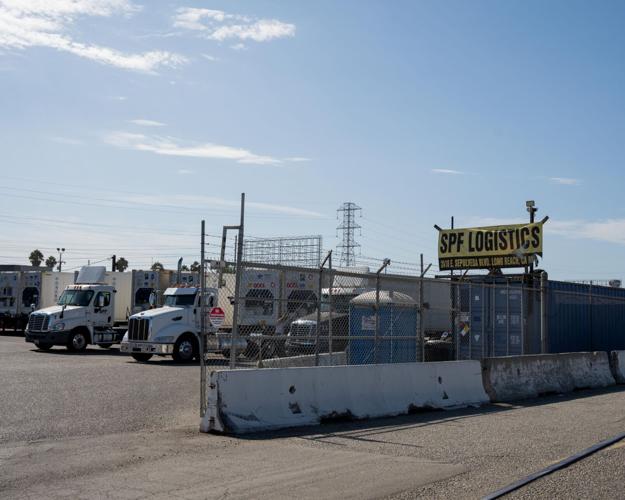
The analysis shows that methyl bromide levels detected at the site tend to be highest between 9 p.m. and midnight. The two facilities downwind of the West Long Beach air monitor, SPF Terminals and Ag-Fume Services, Inc. (located at Three Rivers Trucking), did not respond to calls and emails.

Maricela Morales’ son attends St. Lucy Catholic School, which is about a half mile from two Long Beach fumigation facilities. Photo by Jeremy Lindenfeld for Capital & Main.
Capital & Main’s analysis of the monitoring data shows the average concentration of methyl bromide between May 2025 and early September 2026 was 0.9 ppb, down by more than half from an average of 2.1 ppb recorded between January 2023 and April 2024.
The spikes are also lower than they were two years ago, when on two occasions methyl bromide jumped to nearly 1,000 ppb, approaching the state’s health threshold for unsafe short-term exposure to the air contaminant.
Jill Johnston, an associate professor in the Department of Environmental and Occupational Health at University of California, Irvine, who studies the effects of methyl bromide exposure on children, said that the ongoing spikes detected this year in West Long Beach could be harmful.
“Chronic low-level exposures to methyl bromide are a potential health risk, especially to children and vulnerable people,” she said in an email.
Rainbow Yeung, a spokesperson for the South Coast district, said in an email that the spikes didn’t appear to pose a health threat, based on thresholds determined by the California Office of Environmental Health Hazard Assessment.
“While elevated methyl bromide levels are sometimes detected at this monitor, over the past year they have remained below levels where we would expect to see health impacts,” said Yeung.
Community advocates, who are pushing regulators to establish more safeguards to protect residents near fumigation facilities, say they are frustrated with the air district’s slow progress. They say regulators have failed to take immediate steps to protect the health of residents. The advocates have urged the installation of additional air monitors near all the county’s fumigation facilities, not just the two facilities in West Long Beach.
The lack of additional monitoring has consequences, said Alex Marquez, director of the Wilmington-based environmental justice group Coalition for a Safe Environment. He added that many residents near fumigation facilities are unaware of the dangers they may face.
“The people aren’t empowered enough to know what’s going on in their own neighborhoods, and that’s a scary thing,” said Marquez.

SPF Terminals is the site of one of two fumigation facilities located near a densely populated Long Beach neighborhood. Photo by Jeremy Lindenfeld for Capital & Main.
A CalMatters investigation last year found that although facilities in San Pedro and Compton use the largest volumes of methyl bromide of all the county’s facilities, the air in nearby residential neighborhoods has never been tested. The West Long Beach site remains the South Coast air district’s only station monitoring for methyl bromide.
Yeung said in an email to Capital & Main that the air district is working “expeditiously” to respond to community concerns by using “multiple regulatory tools to ensure that this source will not pose a public health impact in the future.”
Since air quality officials began hosting public meetings about the problem in January 2025, local officials have taken modest steps to reduce some residents’ exposure to the toxic gas. Early last year, the Los Angeles County Agricultural Commissioner, which issues permits to fumigation facilities, required Ag-Fume Services and SPF Terminals in West Long Beach to limit their spraying to after 3:30 p.m., when students are out of school.
* * *
Every month, hundreds of thousands of tons of produce are imported into the Port of Long Beach.
Before those grapes, berries and other produce can reach the shelves of local grocery stores, they are sprayed with methyl bromide to ensure that pests and fungi are exterminated.
After the fruits and vegetables are sprayed, the methyl bromide escapes into the air and typically lingers near the ground for a few hours until dispersing into the atmosphere, said Johnston.
Methyl bromide was banned internationally under the 1987 Montreal Protocol, which called for the toxic, ozone-depleting gas to be completely phased out by 2005. Despite the ban, methyl bromide use is permitted across California and other places under specific exemptions.
California air regulators have known for years about potentially harmful methyl bromide operations near residential communities in Los Angeles County. Officials with the California Air Resources Board, which was previously primarily responsible for regulating methyl bromide, heard concerns about fumigation facilities operating near residential neighborhoods during a 2019 community tour of the Long Beach area, according to the agency’s website.
It wasn’t until years later, in January 2023, that the agency began measuring the community’s exposure to the air contaminant from a new monitoring station in West Long Beach.
The Air Resources Board said the monitor was installed when new methyl bromide air monitoring technology became available and COVID-19 restrictions were lifted.
“Our effort to respond to community concerns was significantly impacted by COVID‑19 restrictions, which required the Air Resources Board to modify its operations to continue meeting statutory requirements,” said Lynda Lambert, an Air Resources Board spokesperson. “When things began to open up again, establishing the new stationary monitoring site involved extensive coordination and substantial technical and administrative work, so it took time.”
The monitor detected hourly concentrations as high as 983 ppb in February and March 2024. But air regulators didn’t inform nearby residents for more than a year, CalMatters reported last year.
Paola Vargas, the Long Beach organizer for East Yard Communities for Environmental Justice, said residents have had to apply pressure in order to “hold these agencies accountable to actually do their job.”
The South Coast air district, which took over responsibility for regulating the pollutant from the California Air Resources Board in 2025, continues to rely solely on the West Long Beach monitor for gathering data about the community’s exposure to methyl bromide — a major complaint of advocates.
Marquez said that by relying exclusively on information from the single air monitor, the agency is unable to grasp the full scope of the potential health threat and develop regulations that can fully protect communities.
Alison Hahm, an attorney with the Natural Resources Defense Council who has been working closely with advocates on the methyl bromide issue, said South Coast air district officials told her that more monitors haven’t been installed because they’re too expensive.
“It’s always about what’s feasible for operators and cost-effective for operators, but we’ll never talk about the externality that peoples’ lives are being cut short,” Hahm said.
According to Yeung, procuring and installing an individual air monitor can cost between $90,000 and $150,000, while analysis of collected data can cost up to $20,000 per year. Yeung did not answer Capital & Main’s question about whether costs are hindering the agency from installing additional monitors.
Vargas said her organization wants more than just expanded monitoring. The group is also calling for notification systems that would alert communities when spikes occur, for buffer zones between communities and facilities and for tougher penalties for fumigation companies that don’t operate safely.
“Our ultimate goal always in engaging with agencies and electeds is just to have healthier communities, you know, like have cleaner air,” said Vargas.
* * *
Last year, the South Coast air district began evaluating the health risks methyl bromide may pose to residents under a 1987 state law that established what’s known as the Air Toxics “Hot Spots” program.
Depending on the results of those assessments, individual facilities may be required to reduce emissions and notify nearby residents of elevated emissions.

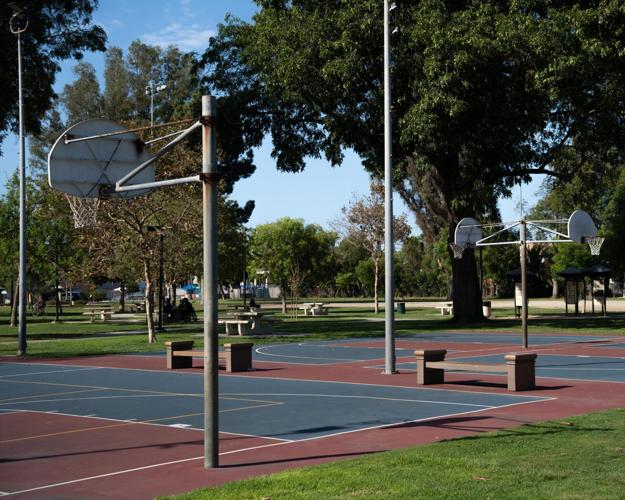
Admiral Kidd Park in West Long Beach. Photo by Jeremy Lindenfeld for Capital & Main.
Of the nine facilities in the region evaluated so far, six scored high enough to require further action. Those facilities are Global Pest Management on Terminal Island, Cal Cartage-Watson in Carson, Global Pest Management in Compton, Stevedoring Services of America in San Pedro, and Ag-Fume Services/Three Rivers Trucking and SPF Terminals in West Long Beach.
In January, the air district also began working on new rules that could lead to tougher methyl bromide emission limits and establish a set of best management practices for all facilities that use the pesticide. Additionally, the rule may require increased monitoring of methyl bromide and could lead the district to take more proactive measures to notify the community of elevated levels of the pollutant, rather than just posting the monitoring data on its website as it does now.
“I’m cautiously optimistic that this is going to be a really strong rule, that AQMD is hearing community demands,” said Hahm.
In May, at the urging of L.A. County Supervisor Janice Hahn, the South Coast district and the Los Angeles County Agricultural Commissioner adopted an agreement that aims to strengthen oversight of methyl bromide use by requiring businesses to obtain separate permits from both agencies and by outlining the role of each in enforcement matters.
Previously, the Agricultural Commissioner had primary permitting and oversight responsibility for fumigation facilities using methyl bromide.
Morales, meanwhile, wonders about the health effects of the pesticide on her family, including her oldest son, a lifelong asthma sufferer.
Morales and her son often return from their runs at around 8 p.m. Elevated emissions are typically a bit later in the evening. But on August 13, a few days after she spoke to Capital & Main, the South Coast air district reported methyl bromide readings of 28.9 ppb at the West Long Beach monitoring station, almost 30 times the level considered safe for chronic exposure.
“They only tell you the minimal,” Morales said, referring to air regulators. “But unfortunately, we have to live here.”
Kani’ya Davis is an Ida B. Wells Society for Investigative Reporting Intern.
This story was supported by the Wake Forest University Environmental and Epistemic Justice Journalism Fellowship.








(0) comments
Welcome to the discussion.
Log In
Keep it Clean. Please avoid obscene, vulgar, lewd, racist or sexually-oriented language.
PLEASE TURN OFF YOUR CAPS LOCK.
Don't Threaten. Threats of harming another person will not be tolerated.
Be Truthful. Don't knowingly lie about anyone or anything.
Be Nice. No racism, sexism or any sort of -ism that is degrading to another person.
Be Proactive. Use the 'Report' link on each comment to let us know of abusive posts.
Share with Us. We'd love to hear eyewitness accounts, the history behind an article.