

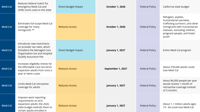
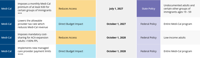


Changes to Medi-Cal are expected to impact millions of low-income Americans in the next few years. (Photo credit: California Budget & Policy Center.)
Due to significant federal and state policy changes to Medi-Cal, it is now reforming how millions of enrollees can access healthcare benefits and services.
In 2025, President Donald Trump’s One Big Beautiful Bill Act made major cuts to the health program with nearly $1 trillion in spending reductions and stricter eligibility requirements affecting the most vulnerable, low-income families.
The American Community Media (ACOM) hosted a briefing last Tuesday, with policy experts from the California Department of Health Care Services (DHCS) explaining the latest federal and state changes affecting Medi-Cal and what they mean for its members.
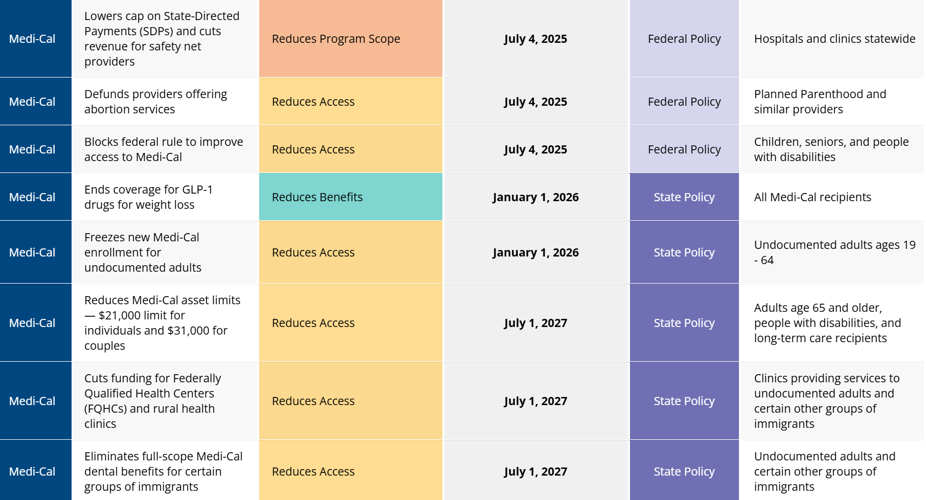
Tyler Sadwith, State Medicaid Director of DHCS, highlighted the first modification to the healthcare program, which went into effect in the beginning of January of 2026. DHCS implemented a Medi-Cal enrollment freeze for certain undocumented adults who receive state-funded full-scope Medi-Cal through the Adult Expansion programs.
Although this freeze prevents new enrollments for undocumented adults, individuals already enrolled in full-scope Medi-Cal will remain eligible as long as they complete their annual renewal on time.

According to the California Health and Human Services Agency, H.R. 1 could cause 1.3 million Californians to lose their Medi-Cal — California’s Medicaid program. (Photo credit: California Budget & Policy Center.)
He emphasized that regardless of immigration status, children ages 0-18 and pregnant individuals can continue to receive full-scope Medi-Cal coverage throughout pregnancy and for one year after the pregnancy ends. And those individuals who are under the age of 26 who were in foster care when they were 18 years of age also remain protected from the new changes to Medi-Cal.
“People who are affected by this freeze in enrollment for new undocumented adult immigrants can generally only apply for restricted scope Medi-Cal, which covers emergency care, pregnancy care and certain nursing facility care,” said Sadwith.
Work requirements and new rules
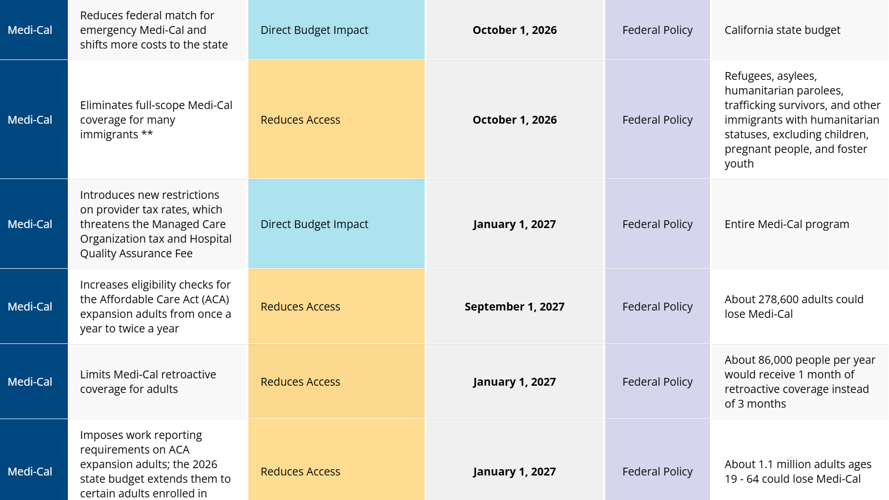
Another change that is taking place starting January 2027 is new work requirements for Medi-Cal applicants between ages of 19 and 64 who do not have children or disabilities.
Under the new work requirements, applicants and enrollees will be required to demonstrate 80 hours per month of qualifying activities, including employment, volunteering, attending school or participating in job training. Additionally, certain members can meet this new federal requirement by working and earning at least $580 per month.
Sadwith explained who is exempt from this new federal requirement. Those exempt include pregnant and postpartum individuals, parents and caretakers of children ages 0-13, individuals with disabilities or serious health conditions, American Indians, Alaskan natives, certain former foster youth and people recently released from jail or prison.
Another change happening that same month is that medical members with different immigration statuses will move from receiving healthcare through a managed care health plan to fee-for-service. Sadwith said that this change simply changes how members are able to access care and does not mean that they have to pay for services.

H.R. 1 could also cost California between $2.3 billion and $5.1 billion annually. (Photo credit: California Budget & Policy Center.)
The third federal change will take effect on March 1, 2027, requiring enrollees between the ages of 19 to 64 to have their eligibility reviewed every six months instead of once annually.
“Pregnant and postpartum people, American Indian and Alaska Native members, certain former foster youth and others will continue with having their medical eligibility checked only once per year like it happens today,” said Sadwith. “We encourage members to open notices from Medi-Cal right away and respond by the deadline to avoid losing coverage because of missing information or paperwork.”
Yingjia Huang, Deputy Director for Health Care Benefits & Eligibility at DHCS, discussed changes taking place in July 2027, which will reform how some immigration statuses are classified for federal Medi-Cal funding. These immigration statuses include refugees, asylees, humanitarian parolees and certain survivors of domestic or human trafficking with pending immigration cases. People affected by this federal change will be limited to pregnancy-related care and emergency services only, rather than state-funded full-scope coverage
Additionally, adults with certain immigration statuses will also lose full dental benefits on that same date. Treatment for severe pain, infection and extractions will still be covered through emergency dental care. Children, pregnant people, postpartum people and former foster youth under age 26 will keep full dental benefits.
Before these changes take place, Huang assured that individuals impacted by this change will receive letters from the department to navigate this transition.
She also shared that beginning July 1, 2027, Medi-Cal members who are ages 19 to 59, not pregnant, and undocumented or have unsatisfactory immigration status and remain in full-coverage Medi-Cal will be required to pay a monthly fee to keep their Medi-Cal coverage. “This monthly premium could be anywhere between $30 to $50,” Huang said.
She emphasized that if the required monthly premiums are not paid, coverage can change to restricted scope Medi-Cal which is emergency and pregnancy-related services only.
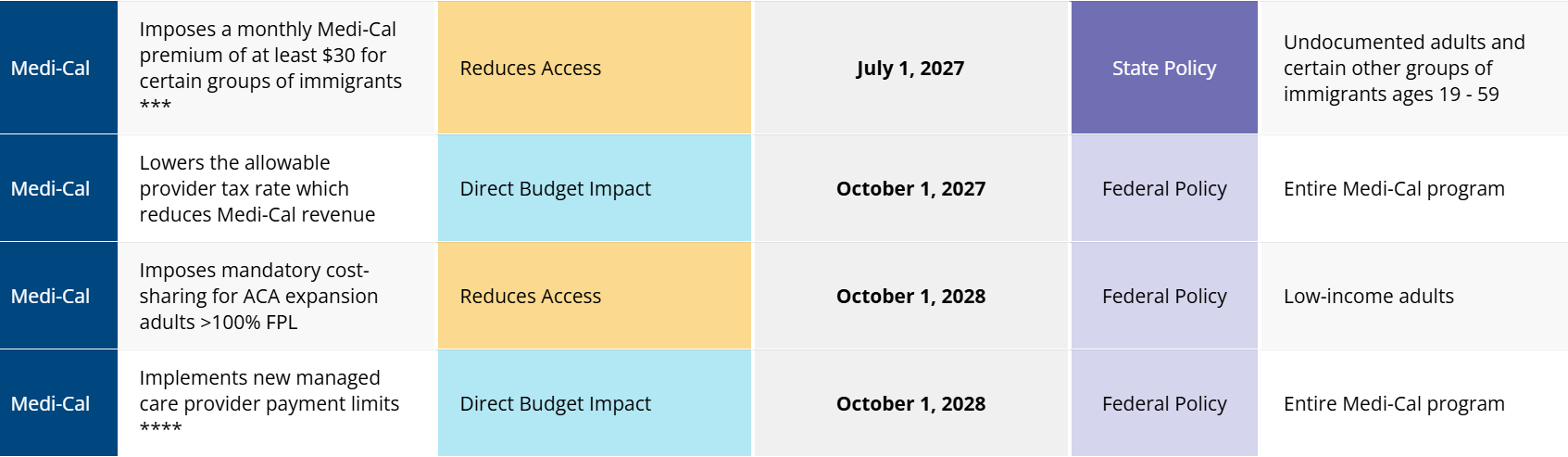
The table displays a timeline of the upcoming cuts to Medi-Cal introduced by H.R. 1 and the recent state budget. (Photo credit: California Budget & Policy Center.)
Beginning October 1, 2028, another federal change impacting some adults between the ages of 19 and 64 who are not pregnant, not on Medicare and make more than $15,560 a year may have some co-payments for specialty care, treatments and tests.
“Co-payments will not apply to services such as emergency care, regular checkups, pregnancy care, pediatric care, mental health and substance use treatment or care at community health centers or rural clinics,” said Huang.
DCHS policy experts emphasized that undocumented adult enrollees trying to maintain their coverage will depend slightly on completing renewals on time.
Undocumented adults who were already receiving full-scope Medi-Cal before Jan. 1, 2026 will continue to receive care. However, missing required documentation during a renewal may result in a loss of full coverage, said Huang.
She said that it is important for enrollees to have all their personal information up to date with their county's Medi-Cal office, which includes email, mailing address and phone number. Huang pointed out that if the information changes, healthcare members must report it within 10 days of opening renewal packets or by responding quickly by the deadline. “Renew your coverage on time and continue using your Medi-Cal,” she said.
To apply for Medi-Cal benefits, new applicants must complete an application online at benefitscal.com, which is available in 19 languages. Enrollees are also encouraged to renew their coverage on time to avoid interruptions and continue receiving their Medi-Cal benefits.








(0) comments
Welcome to the discussion.
Log In
Keep it Clean. Please avoid obscene, vulgar, lewd, racist or sexually-oriented language.
PLEASE TURN OFF YOUR CAPS LOCK.
Don't Threaten. Threats of harming another person will not be tolerated.
Be Truthful. Don't knowingly lie about anyone or anything.
Be Nice. No racism, sexism or any sort of -ism that is degrading to another person.
Be Proactive. Use the 'Report' link on each comment to let us know of abusive posts.
Share with Us. We'd love to hear eyewitness accounts, the history behind an article.