
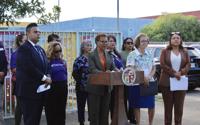
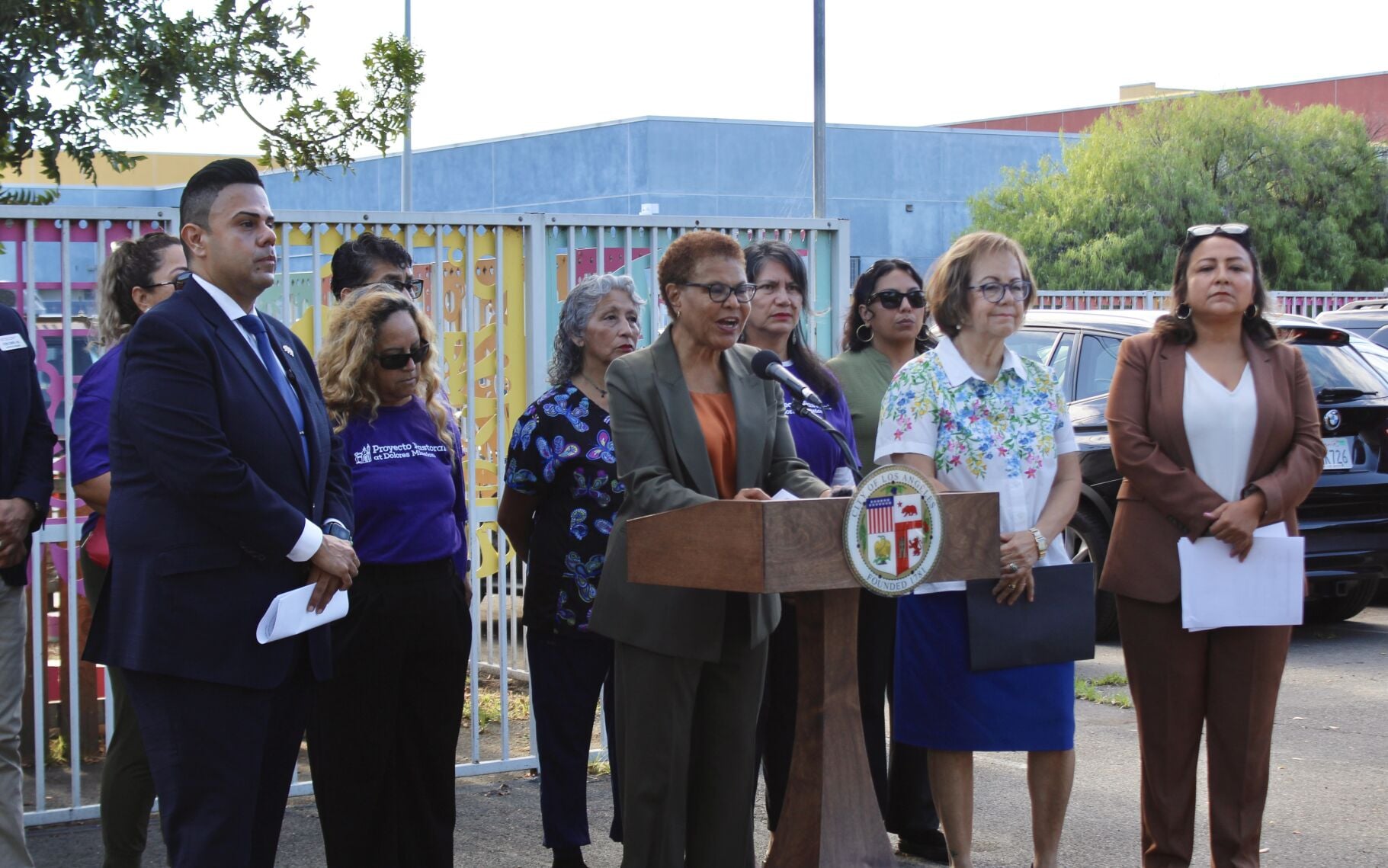
(from left to right) Mark Gonzalez, Karen Bass, Maria Elena Durazon and Raquel Roman at a press conference on Wednesday morning in Boyle Heights. Photo by Brenda Verano
City and state lawmakers are urging Gov. Gavin Newsom to sign legislation currently on his desk, created in response to the Lineage Logistics warehouse fire in Boyle Heights.
On Wednesday morning, Los Angeles Mayor Karen Bass, California Sen. María Elena Durazo (D-Los Angeles) and Assemblyman Mark González arrived at Proyecto Pastoral to urge Newsom to sign Assembly Bill 817 and Senate Bill 716, both of which seek to hold certain businesses, like Lineage, to higher and stricter standards.
The press conference was held just days after Lineage Logistics announced they had completed the full cleanup and disinfection of the fire-damaged cold storage facility over the weekend.
“ The people of Boyle Heights deserve action. They deserve accountability, and of course, first and foremost, they deserve protection,” Bass said. “We are not done. The long-term recovery process is just beginning, but we are turning this moment into action, accountability and stronger protections for Boyle Heights and all communities.”
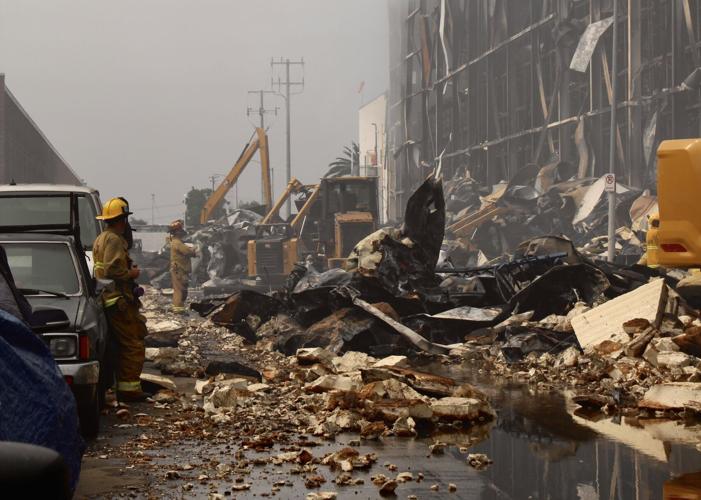
Both of these bills are a legislative response to the massive warehouse fire that broke out on June 17, 2026, at the 491,000-square-foot warehouse, which burned for an entire week and left nearby residents dealing with health concerns stemming from foul, rotting odors and fly and rodent infestations.
Newsom proclaimed a State of Emergency for L.A. County on June 20, three days after the fire broke out, putting the California Office of Emergency Services in direct coordination with local support efforts.
In an August statement announcing federal disaster assistance for business owners, Newsom touted the state’s response, saying while Boyle Heights “has endured tremendous disruption, [we] moved quickly to bring every available resource to bear.”
Last-minute changes
Both Gonzalez’s and Durazo’s bills were gut-and-amends, a legislative maneuver that lawmakers often use to change a bill’s language to give it a better chance of passing.
AB 817 was originally related to public court records while SB 716 was about telephone services for low-income households. Both bills were changed less than three weeks before the end of the legislative session to ensure they go into effect next year.
Gonzalez told CALÓ News last month that he changed his bill because “we didn’t plan on a fire,” adding that the community wants to see action now.

Firefighters at the Lineage Fire. Photo by Brenda Verano
SB 716
SB 716, introduced by Durazo, would allow cities and counties to impose higher fines for violations against large commercial buildings when there are serious threats to health or safety. The bill raises the maximum fines for city and county ordinance violations at large nonresidential structures of 20,000 square feet or more from a previous cap of around $2,000 up to $50,000 per violation.
On Wednesday, Durazo said fines for city and county ordinance violations have not been raised since 1983.
For Lineage Logistics, following a July 15 inspection and a July 21 reinspection, L.A. County health officials cited the company for unsanitary and nuisance conditions and imposed fines for rodent and pest violations. In total, Lineage was issued six citations and was fined $500 per day from July 23 through July 29. In addition, the L.A. County Department of Public Health began citing each violation separately on July 29, resulting in fines of up to $2,000 per day.
Local leaders, however, say that for a multi-billion-dollar company like Lineage, these fines are a pittance.
“For a multi-billion-dollar corporation, that is not a deterrent. It is a rounding error. Our constituents should not have to bear the cost of a private company's slow cleanup,” she said.
AB 817
Gonzalez’ AB 817 would withhold building permits for cold storage facilities specifically located in Boyle Heights unless the owner or operator of the facility establishes a contingency fund to support nearby communities if a state of emergency is declared following a disaster.
The contingency fund is required to be up to $20 million and be used solely for housing, rental and food assistance, air quality monitoring, healthcare costs and vector control, a method to contain and get rid of insects in the area. The contingency fund cannot be used for cleanup efforts.
“We're putting these two bills in place to make sure that Latinos are represented, workers are represented, children are represented, and those in the area who live here are represented and not left behind,” Gonzalez told CALÓ News. “This is a symbol of the Latino community because we are resilient, but we are not going to let ourselves be taken advantage of by corporations who do not clean up the mess that they started in the first place.”
Gonzalez originally faced pushback from agriculture and food industries, claiming the bill was too vague and would discourage investment in new facilities.

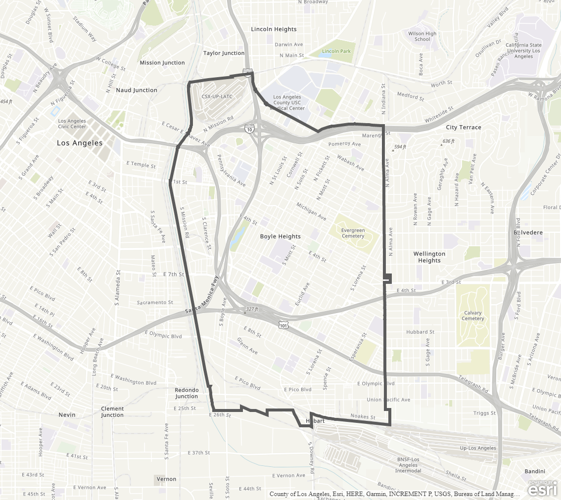
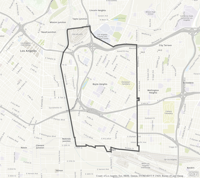
Geographic boundaries of the Boyle Heights Community Plan. (Los Angeles City Planning)
In response, the final bill that now sits on Newsom’s desk specifies that it applies only to cold storage facilities over 20,000 square feet located within the boundaries of the Boyle Heights Community Plan. The new Community Plan — which had not been updated since 1998 — went into effect on Aug. 20. Beginning July 1, 2028, the guidelines would apply throughout the state.
AB 817 also ensures that any settlements received by L.A. County residents or business owners between 2027 and 2032 as a result of the Lineage Fire will not be subject to state income taxes.
Community response
For months now, community groups like Protect LA Now, InnerCity Struggle, Alliance of Californians for Community Empowerment, Inclusive Action for the City, Community Power Collective, Proyecto Pastoral and Dolores Mission, among others, have been organizing local residents, the majority of whom are Latinos, in accessing health services, monetary compensation, as well as actively responding to the environmental crisis and public health hazards caused by the ongoing smoke.
In August, St. John’s Community Health published a new study on the severe and ongoing health impacts of the fire that were seen through their mobile clinics.
According to their study, 36% of patients served met surveillance criteria directly related to toxic exposure and smoke inhalation, including acute upper respiratory infections, eye disorders and conjunctivitis, persistent cough, asthma exacerbation and other respiratory conditions and distress. Of the affected patients, 92% were Latinos and 64% were 50 years or older.
Raquel Roman, the executive director of Proyecto Pastoral at Dolores Mission, told CALÓ News that when the fire broke out, the community was stretched thin due to insufficient resources. She said the impact went far beyond the fire itself, as families were forced to breathe unhealthy air, homes were destabilized, workers lost their jobs, and small businesses in the community lost customers and income.
“When the fire first broke out, we needed air purifiers and there was a scarcity of air purifiers. Nonprofits like Proyecto Pastoral had to figure it out,” Roman said. “Both of these bills would ensure that there are resources so that we're able to provide immediate assistance to our community.”
Roman said local community residents were the driving force behind the bills reaching the governor's desk.
“Communities from all over the state helped make phone calls to their different elected officials so that we could ask for their support. It was a community effort across California that got these bills passed,” she said.
Newsom has until Sept. 30 to either veto or sign the bills into law.







(0) comments
Welcome to the discussion.
Log In
Keep it Clean. Please avoid obscene, vulgar, lewd, racist or sexually-oriented language.
PLEASE TURN OFF YOUR CAPS LOCK.
Don't Threaten. Threats of harming another person will not be tolerated.
Be Truthful. Don't knowingly lie about anyone or anything.
Be Nice. No racism, sexism or any sort of -ism that is degrading to another person.
Be Proactive. Use the 'Report' link on each comment to let us know of abusive posts.
Share with Us. We'd love to hear eyewitness accounts, the history behind an article.